الجزیره فارسی
روایت خاورمیانه
الجزیره فارسی
روایت خاورمیانه 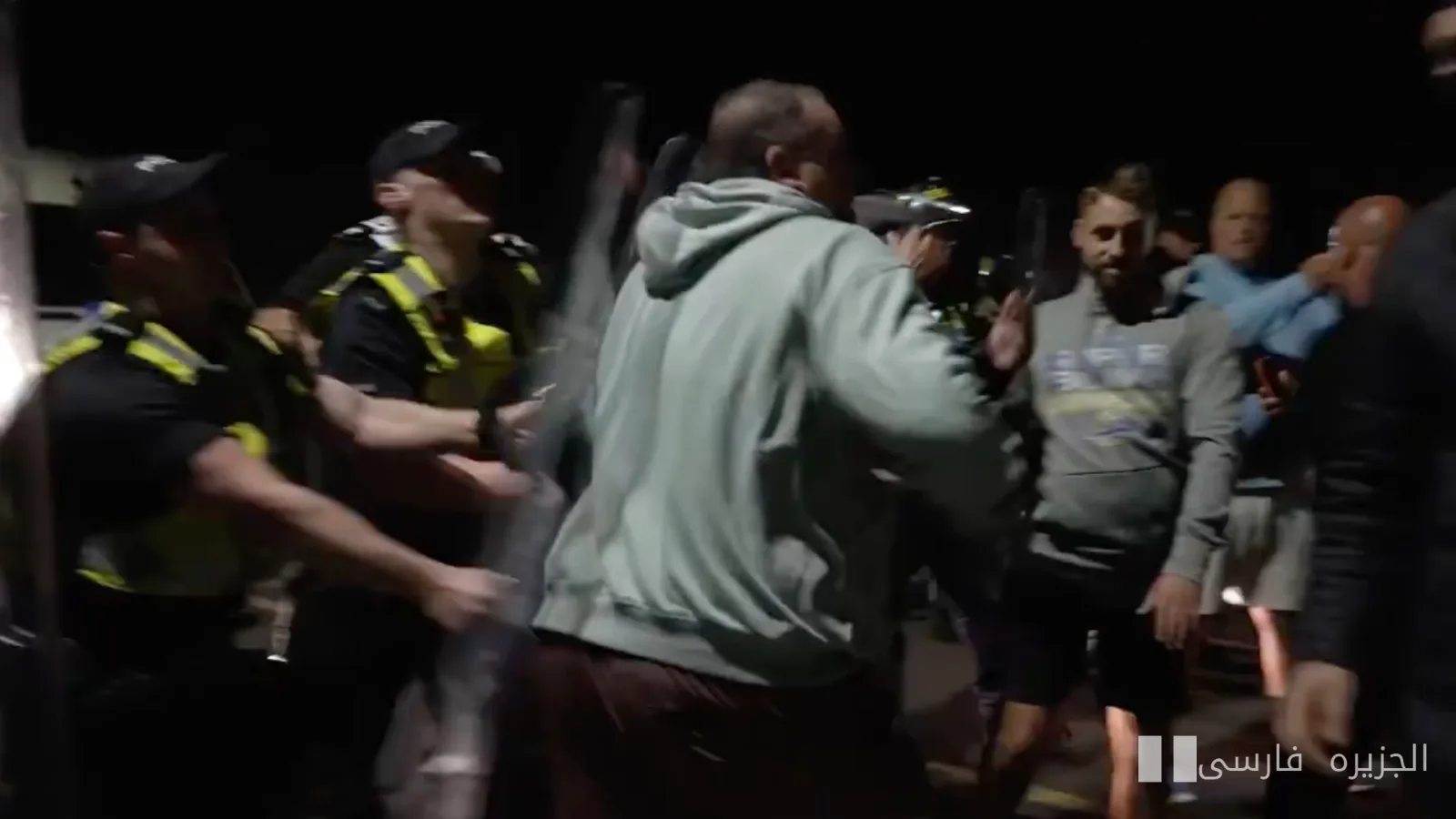
Following the arrival of around ۱۴۰ migrants in Britain via a small boat, tensions in Portsmouth reached a peak. The anti-immigration protests, held to express dissatisfaction with the government's immigration policies, quickly escalated into clashes with the police.
Background of the tensions
These clashes reflect a growing public dissatisfaction with immigration policies that many people feel unhappy about. Protesters are calling for stricter limits on the entry of migrants into the country, claiming that this issue negatively impacts local resources and infrastructure.
As the police attempted to control the situation, protesters attacked security forces, causing chaos in the streets. These clashes have not only attracted media attention but have also raised concerns about public safety and the future of immigration policies in Britain.
Reactions and implications
The British government has stated that it will respond vigorously to any violence and unrest following these incidents. These clashes could have widespread consequences for the country's social and political policies, especially at a time when discussions about immigration and refugee acceptance have become one of the hot topics globally.
Given this situation, it may be said that the recent protests are not just a turning point in the political developments of Britain but also a sign of deeper changes in societal attitudes towards immigration and asylum. The fact that protesters come from all walks of life indicates shared and deeper concerns among the public regarding migrants.