الجزارا فارسی
روایت خاورمیانه
الجزارا فارسی
روایت خاورمیانه 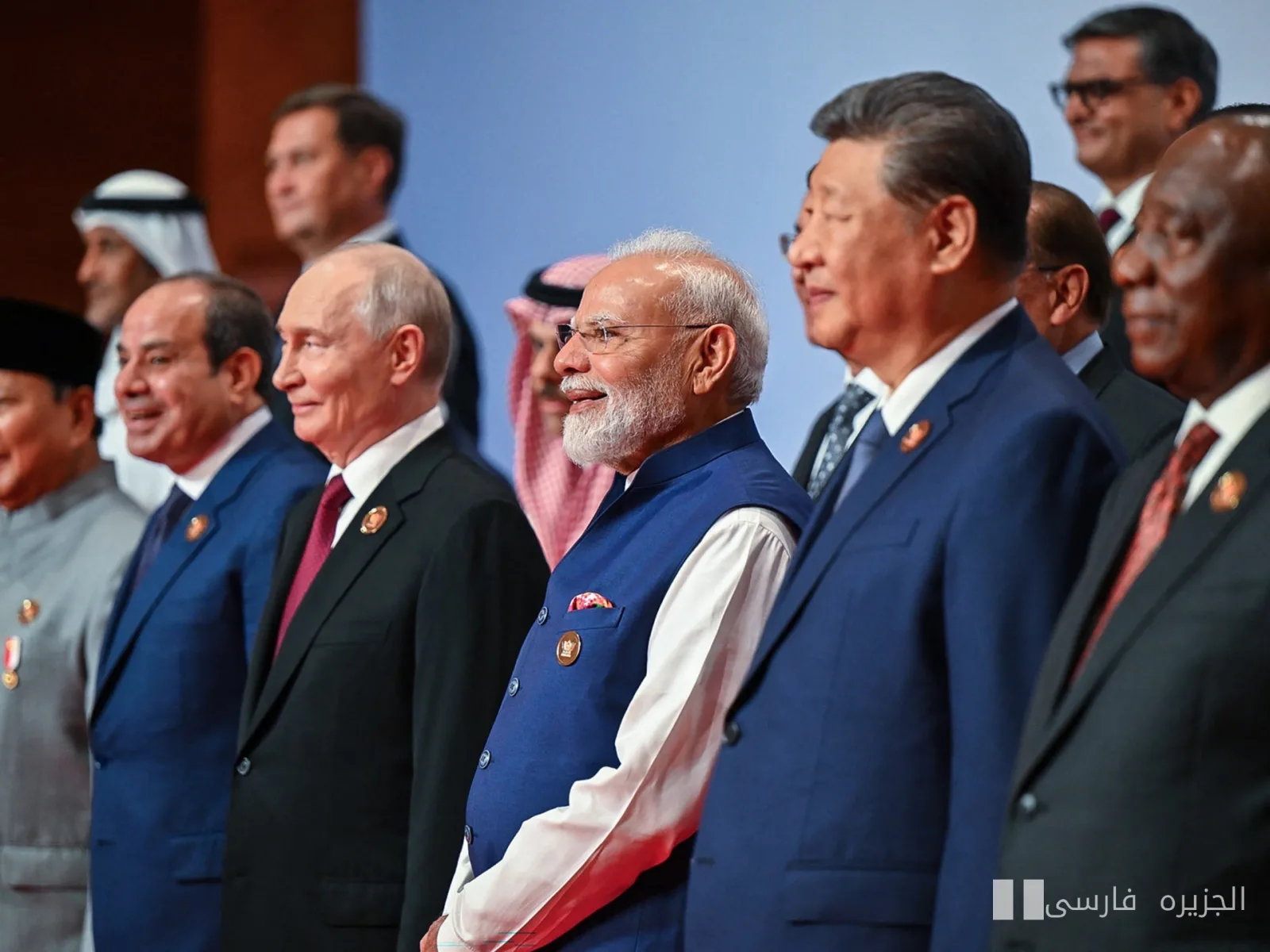
The BRICS 2026 summit, as an important international event, witnessed the differing positions of its members regarding the ongoing wars in the Middle East. While many countries around the world have firmly taken a stand against wars and military aggressions, this 11-country bloc refrained from issuing a statement condemning the actions of the US and Israel against Iran.
Division in the Coalition
This silence not only indicates a division among BRICS members but can also be seen as a red flag for the future cooperation of this bloc. Countries that traditionally have differing positions on geopolitical issues are now part of a coalition that seems to have drifted apart in the face of global crises.
It was expected that BRICS members, especially given the heightened tensions in the Middle East, would adopt a strong and unified stance. However, the lack of a decisive statement in this regard highlights the internal challenges of this group and the need for further discussions to align positions.
Global Consequences
This situation will not only affect the future of BRICS cooperation but could also have widespread implications for international policies. In today's world, the positions of this bloc can play a significant role in determining the fate of many crises and wars. However, with the current situation, the future of this coalition is severely in question.
Overall, the BRICS 2026 summit demonstrated that while this bloc is emerging as a power on the global stage, it faces serious challenges and needs to strengthen internal solidarity and unity.