الجزیره فارسی
روایت خاورمیانه
الجزیره فارسی
روایت خاورمیانه 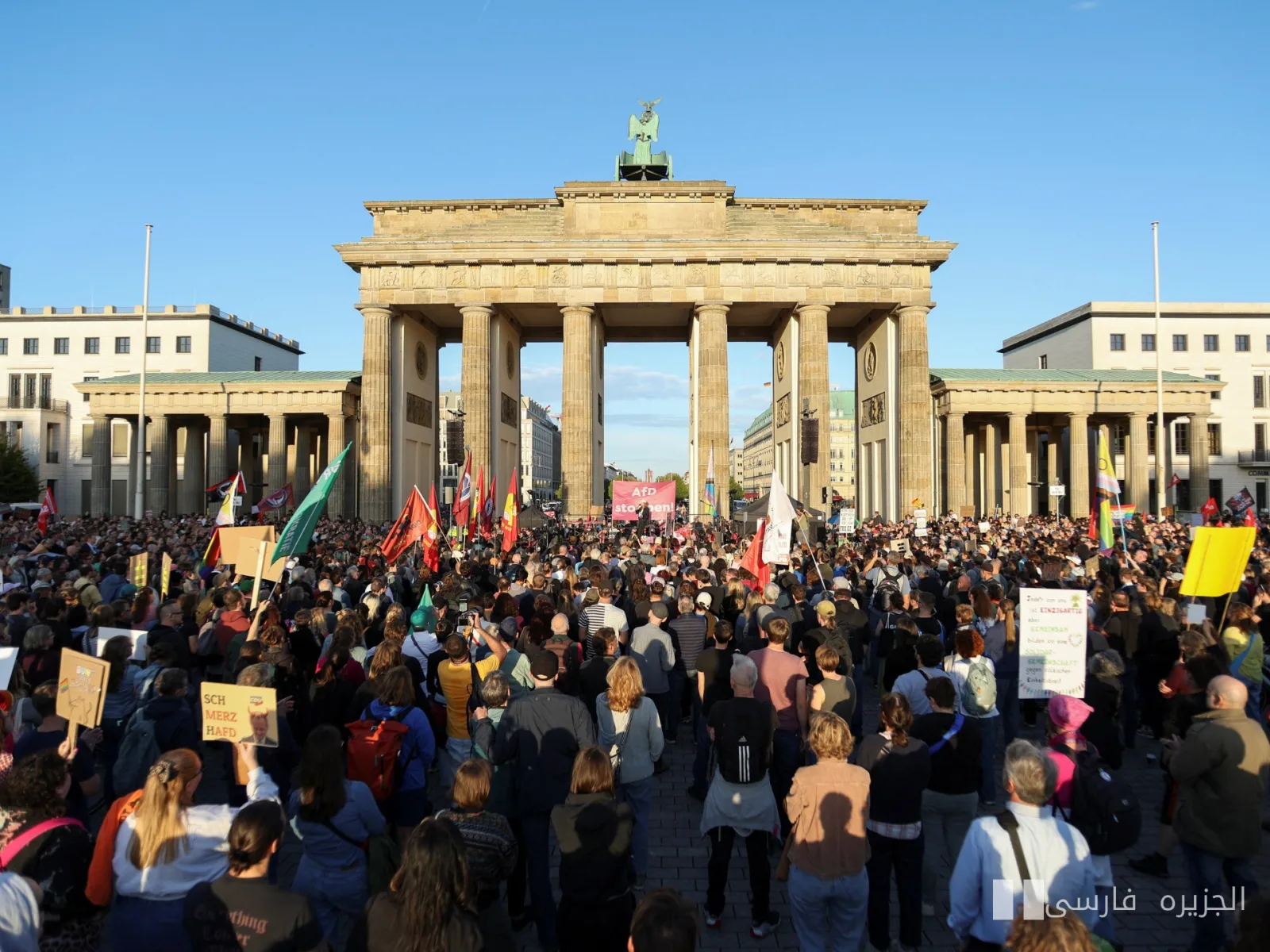
As Germany heads towards a pivotal election, the "Alternative for Germany" (AfD) has sparked a storm of concern and protests by gaining significant votes in the eastern local elections. Many analysts believe that these developments could mark a turning point in German political history and create the possibility of the far right forming the first local government since the fall of the Nazis.
Protests in Berlin
Following the electoral successes of this party, the streets of Berlin have witnessed widespread gatherings and protests. Demonstrators have taken to the streets, chanting against any possibility of this party forming a government. These protests reflect deep social and political concerns among various segments of German society.
The AfD, known for its anti-immigration and nationalist positions, has now become one of the main political currents in Germany. In the recent elections, the party has managed to secure significant votes with appealing programs for specific segments of society, raising alarm bells for traditional parties.
Concerns About the Future
Many analysts believe that if this trend continues, not only will Germany's domestic policies be affected, but it will also impact European policies. The success of the far-right party in the elections could lead to the strengthening of similar parties in European countries and fuel a wave of nationalism across the continent.
As Germany prepares for the upcoming federal elections, the question arises whether traditional parties can confront this serious challenge and prevent the rise of the far right? Or is German society on the brink of fundamental and irreversible changes?