Al Jazara
روایت خاورمیانه
Al Jazara
روایت خاورمیانه 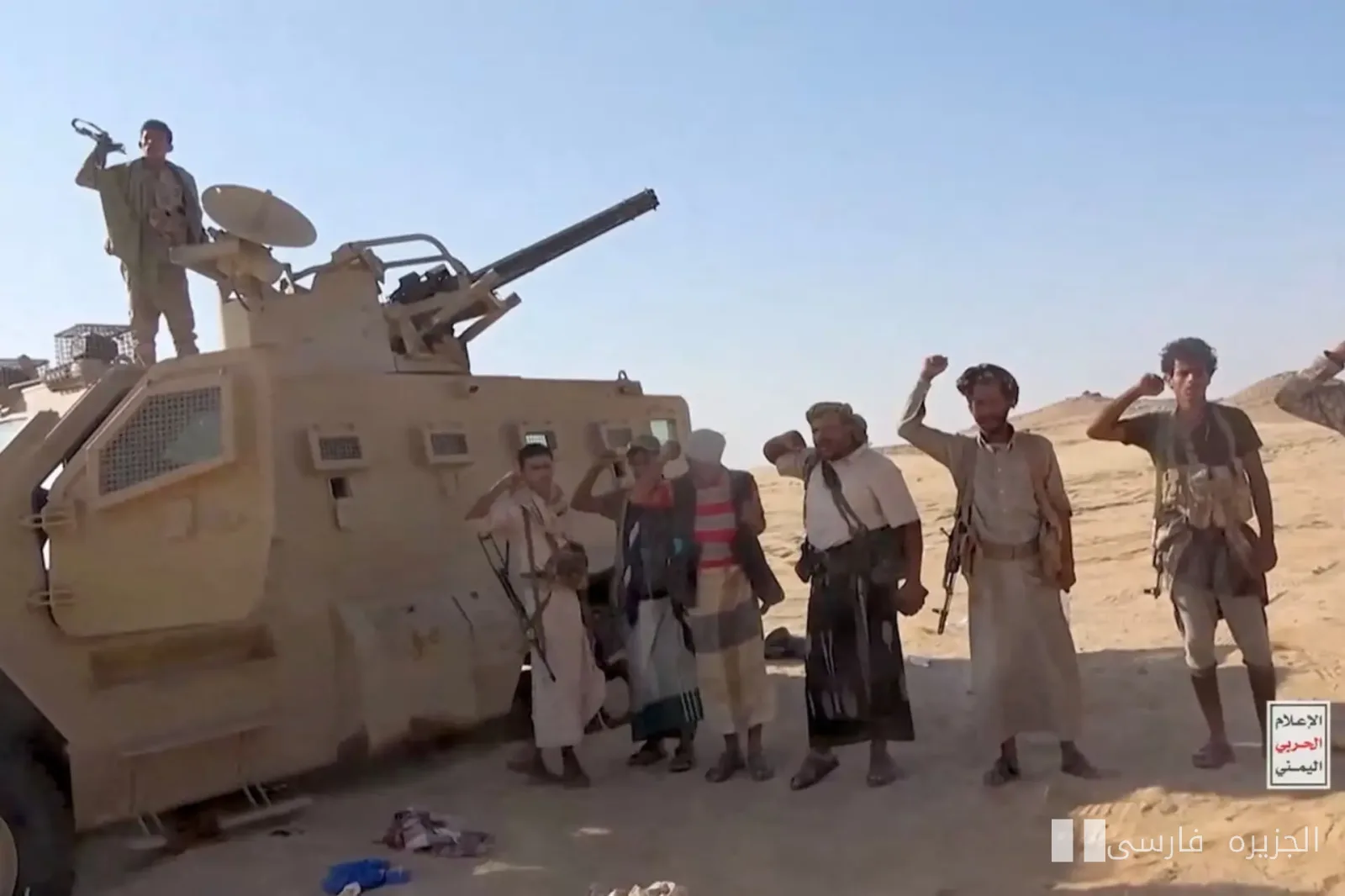
Following their recent advances along the Bab al-Mandab coasts, the Houthis have reached a point where their missile and drone capabilities pose a serious threat to global trade. These developments have occurred in recent days along the western shores of Yemen, particularly in the Bab al-Mandab area, one of the key points on the global trade map.
History and Current Status of the Houthis
The Houthis, who began as a Zaidi religious movement in the late 1990s, now count as a force of about 350,000 individuals. This group has managed to acquire advanced weapons and military equipment through six rounds of war with the central government. Their ballistic missiles have a range of over 1,800 kilometers, and their drones have reached targets in Saudi Arabia and even Israel.
Read more: Saudi Arabia Faces Challenges of Isolation and Decision-Making in Yemen
By capturing Mokha and other parts of the Red Sea coasts and islands, the Houthis are currently positioned next to a strait that is only 19 kilometers wide at its narrowest point. This strategic position allows them to focus their operations on shipping and trade in the Red Sea.
New Changes and Threats
The Houthis' advances signify a change in the geography of the war and their threats. Forces that once only fought in the mountains of Yemen are now positioned next to an important corridor for global trade. These changes mean that their threats extend not only towards Saudi Arabia but also towards ships and global trade.
Additionally, the use of drones in the battlefield has significantly increased. Published images indicate that the Houthis are dropping various munitions using drones on vehicles and opposing forces. This change in warfare reflects a transformation in the Houthis' military strategy.
Alongside these advancements, the Houthis have also acquired new equipment. Images of armored vehicles, tanks, and advanced weapons that they have recently obtained demonstrate the increasing military power of this group. However, experts say that the Houthis still rely on foreign aid to meet some of their technological and weaponry needs.
Simultaneously with these developments, the ceasefire in Yemen that was established in 2022 is seriously collapsing, and fighting has intensified in various regions of Yemen. This situation could lead to heightened tensions in the region and an increase in international disputes.
Ultimately, Bab al-Mandab is not just another territorial achievement for the Houthis; it is a strategic position that connects their military power to one of the main arteries of global trade.
Read more: Abdullah Öcalan and the Challenges of Peace with Ankara in Villa · The Fall of the Port of Mokha; A New Challenge for Mohammed bin Salman in Yemen