الجزیره فارسی
روایت خاورمیانه
الجزیره فارسی
روایت خاورمیانه 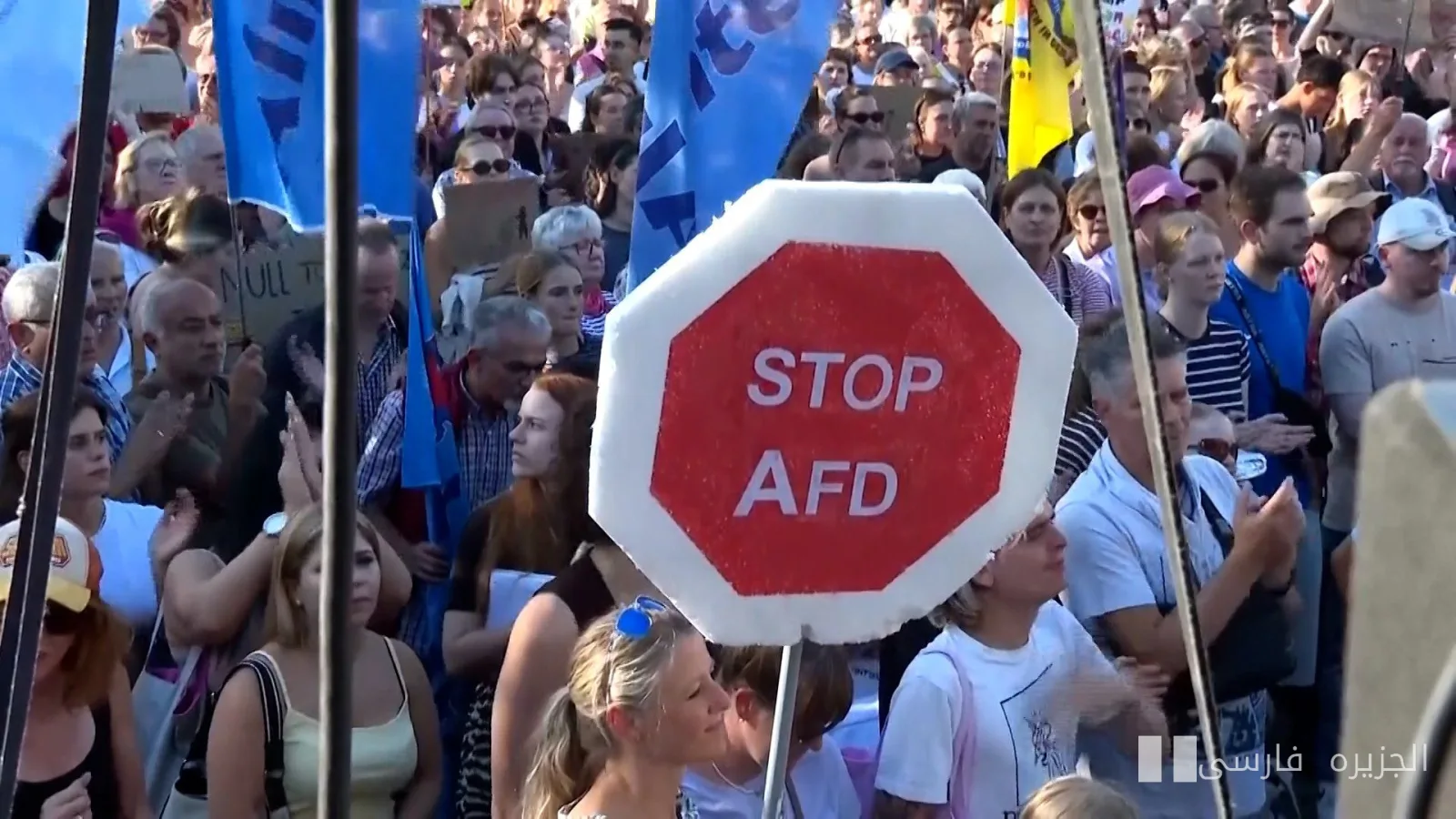
Following the electoral victory of the far-right group AfD in Germany, the city of Cologne witnessed massive protests that brought thousands of demonstrators to the streets. This gathering is seen as a symbol of the community's opposition to the increasing influence of extremists and potential threats to democracy and social cohesion in Germany.
Concerns and Political Consequences
Protesters took to the streets with slogans against racism and extremism, calling for a diverse and inclusive Germany. This gathering reflects the deep concerns of the people about the social and political consequences of AfD's victory, which analysts say could pave the way for increased social tensions and ethnic divisions in the country.
Demonstrators also criticized the group's strict and racist immigration policies, emphasizing the need to uphold human values and human rights. Many believe that AfD's victory could lead to the normalization of extremist and racist ideas in German society.
International and Domestic Reactions
These protests have not only resonated in Germany but have also received widespread attention internationally. Human rights organizations and other international bodies have warned about this trend and emphasized the need to adhere to democratic values and human rights. Meanwhile, some political experts believe that these protests could lead to the formation of a broader front against extremism in Germany and other European countries.
However, there are still concerns about whether these protests can have a real impact on Germany's future policies. In this context, Germany faces serious challenges that could affect the political and social future of the country.