الجزیره فارسی
روایت خاورمیانه
الجزیره فارسی
روایت خاورمیانه 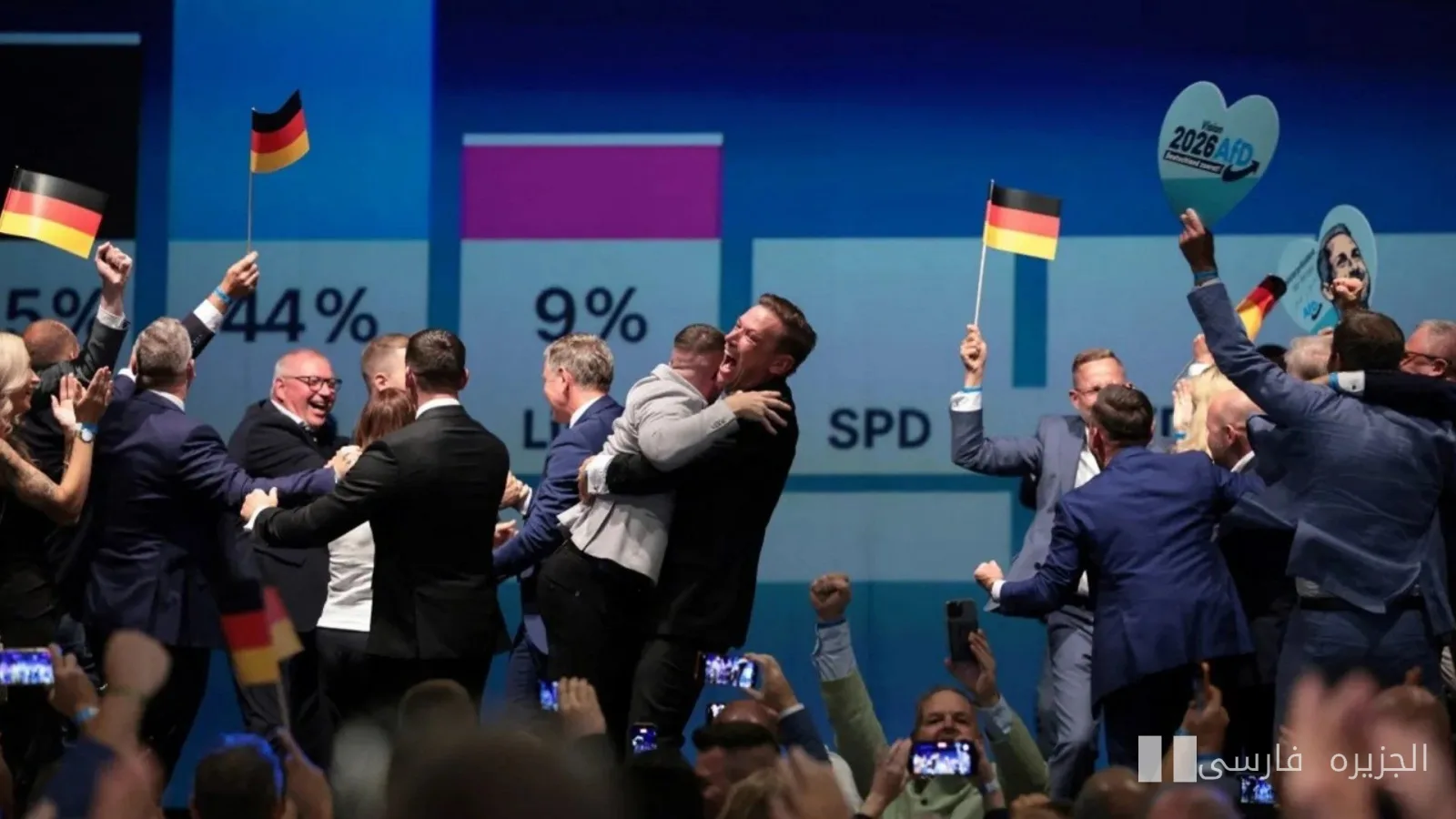
In an unexpected turn of events, the far-right party "Alternative for Germany" (AfD) has achieved near-majority success in one of the recent regional elections in the country. This outcome not only casts a shadow over Germany's political future but could also have profound effects across the entire continent of Europe.
Change in the Political Paradigm
The rising popularity of the AfD signifies a shift in Germany's political paradigm. This party, known for its nationalist and anti-immigration views, has managed to attract a significant portion of the electorate. However, this increase in votes naturally comes with concerns. Is Germany moving towards a racist and nationalist policy?
This result also serves as a wake-up call for other European countries. Given that the AfD has reached this level of power in a specific region, it can be expected that other far-right parties in neighboring countries will draw inspiration from this success and seek to increase their influence.
An Uncertain Future
Considering the current situation, Germany's political future will be heavily influenced by these developments. If the AfD can achieve similar success in the next elections, it may be forced to form a coalition with other parties, which could lead to fundamental changes in Germany's domestic and foreign policies.
Meanwhile, the reaction of traditional parties to this issue is also noteworthy. Can the left and right parties reach a consensus and unite to prevent the spread of extremism? Or will these developments lead to a serious crisis in Germany's political structure? Only time will provide answers to these questions.