الجزارا فارسی
روایت خاورمیانه
الجزارا فارسی
روایت خاورمیانه 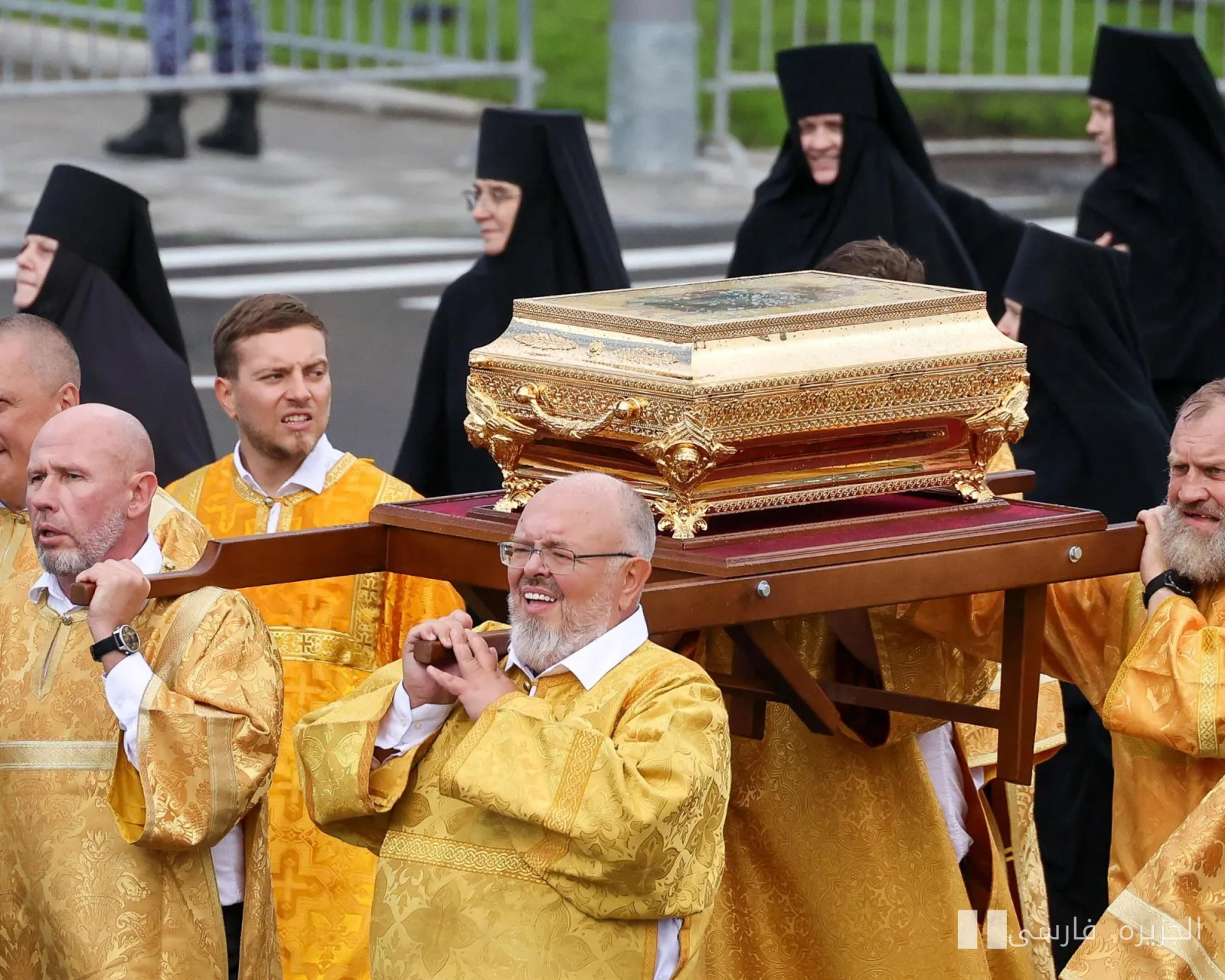
In a controversial and unexpected move, the Russian Orthodox Church has sent part of the remains of a medieval prince to the battlefronts of Ukraine. These remains belong to Dmitry Donskoy, a prince from the 14th century who is specially revered in Russia for his victory over the Mongol tribe known as the "Golden Horde" in 1380.
Boosting Soldiers' Morale with a Historical Relic
This action has been carried out under the banner of "boosting the morale" of Russian soldiers, and the Orthodox Church has stated that these remains can serve as a religious and historical symbol to help soldiers achieve victory on the battlefield. Part of this prince's right hand has been transported as a relic in a special box and transferred to Russian-controlled areas in eastern Ukraine.
This move not only raises questions about the role of religion in contemporary wars but also reflects the Church's efforts to exert more influence over national and military issues in Russia. As the war in Ukraine continues intensely, sending such symbols could signify the strengthening of the soldiers' national and religious identity.
Cultural and Political Implications
On the other hand, this action could exacerbate tensions between Ukraine and Russia, especially at a time when both countries are striving to bolster their national spirit. Some analysts believe that such actions could lead to increased discontent and negative reactions on an international level.
Ultimately, the Orthodox Church's action could be interpreted as a sign of Russia's increasing efforts to link history and religion to modern warfare. Can this relic truly boost the soldiers' morale, or is it merely used as a propaganda tool? Time will tell.