Al Jazara
روایت خاورمیانه
Al Jazara
روایت خاورمیانه 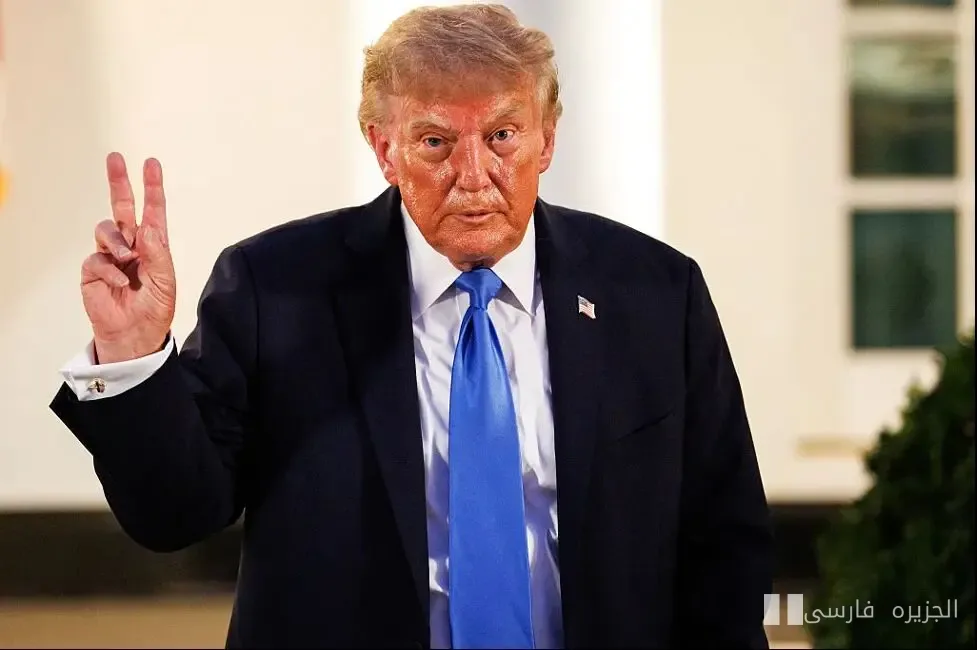
The changing equation of the Iran-U.S. war has clearly manifested in recent days. In this regard, international affairs analysts believe that U.S. economic pressure on the Islamic Republic may lead to more aggressive reactions from Iran. These developments occur at a time when Donald Trump, the President of the United States, has announced the continuation of this situation until the midterm elections in November. According to him, after these elections, Iran may be ready for an agreement due to the lack of electoral pressure leverage.
Warning About the Expansion of Conflict
However, some of Trump's senior advisors have warned him that conflict with Iran may extend beyond his presidency. This assessment clearly indicates that a war initially perceived as a "small war" is becoming a broader dispute over the future of the Middle East. Uncertainty about Iran's missile capabilities and domestic reactions in the U.S. has added more ambiguities to this situation.
Read more: The Israeli regime justifies the annexation of the West Bank with wordplay
On the other hand, the Iranian regime is well aware that the U.S. possesses high destructive capabilities, which has led it to avoid actions that would escalate the conflict so far. However, under the current circumstances, these calculations may no longer be easily maintainable.
Developments in the Bab-el-Mandeb Strait and Yemen
One critical point that could lead to an escalation of conflicts is the Bab-el-Mandeb Strait. This strait is recognized as one of the main routes for ships entering and exiting the Red Sea, and Saudi Arabia transports 5 million barrels of oil through this route daily. The Houthis, Iran's allies in Yemen, have recently fired several missiles towards Saudi Arabia and have gained control of the port city of Mocha. These developments could allow the Houthis to dominate Bab-el-Mandeb, thereby gaining control of two important passages.
In recent days, drones from Iraq attacked Saudi Arabia's East-West pipeline, causing the suspension of this pipeline's operations and leading to a renewed increase in oil prices. These developments have posed serious challenges for Saudi Arabia. Riyadh must either engage in direct confrontation with the Houthis or move towards negotiations with them, both of which carry their own specific difficulties.
Ultimately, it seems that recent developments in the Middle East have brought the equation of the Iran-U.S. war into a new and more complex phase. This situation could have serious consequences for regional stability and global markets, necessitating prompt attention and response from the leaders of the involved countries.
Read more: Recent developments in Yemen are in favor of the Yemenis · Gaza Health Ministry: 3 new martyrs and 27 injured in the past 24 hours