Al Jazara
روایت خاورمیانه
Al Jazara
روایت خاورمیانه 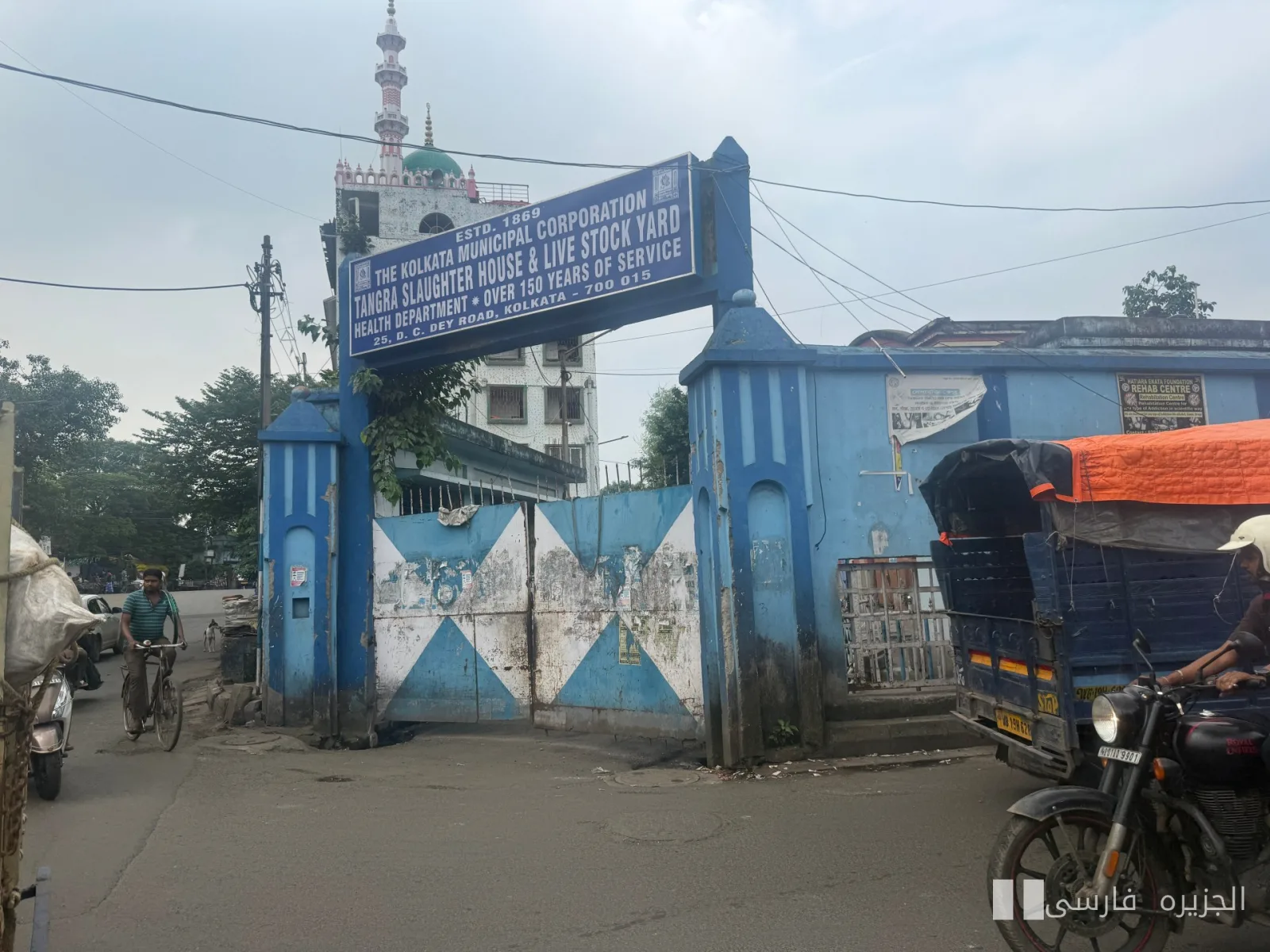
Kolkata, India – It's noon on a weekday and an alley in the Tangra neighborhood, which houses the only cow slaughterhouse in Kolkata, is empty. This slaughterhouse, which is under the supervision of the city's municipality, resembles a fortress due to the large iron gates that are locked from the inside.
A glance through the gap between the gates shows a group of students playing in the vast area of the slaughterhouse. Mohammad Mahmood Alam, the manager of a roadside restaurant catering to day laborers and taxi drivers, says, "These boys have been climbing the walls and entering the slaughterhouse since it was shut down in May." He has not gotten used to this emptiness.
Read more: Fidan: Hormuz Strait Crises Shake Global Economies!
Impact of New Restrictions on the Meat Market
Alam says, "I don't think this government will allow this place to reopen anytime soon." On May 13, the West Bengal government issued a declaration regarding cow slaughter, just four days after the Bharatiya Janata Party (BJP) won the state assembly elections. This election marked the end of 15 years of rule by the Trinamool Congress party led by Mamata Banerjee.
The declaration emphasizes strict adherence to the West Bengal Animal Slaughter Control Act of 1950, stating that cows, bulls, and calves cannot be slaughtered without a health certificate. This certificate is only issued if the animal is over 14 years old or has been rendered unfit for work or reproduction due to age, injury, defect, or incurable disease.
Change in People's Eating Habits
This declaration was issued specifically for Eid al-Fitr in May, and its impact was immediately evident, as restaurants and markets across the city faced a severe shortage of beef. However, these effects have continued even after Eid, and more than three months later, beef is still in short supply. Alam says, "Our sales have significantly decreased."
According to Alam, prices have also risen due to the decrease in supply. A plate of beef stew is now sold for 120 rupees ($1.25), up from 100 rupees ($1.04) before the restrictions. He adds, "We have generally almost given up on buying beef for our homes as well."
West Bengal has historically been one of the main beef-consuming states in India. According to government data, 10.4% of rural households and 7.9% of urban households in this state reported consuming beef or buffalo meat. Despite this, with the imposition of new restrictions, people's eating habits have changed significantly.
Read more: Drone Attack on East-West Pipeline in Saudi Arabia Reduces 4% of Global Oil Supply · Collapse of a Historic Temple into the Ganges; Drenched in Disaster