Al Jazara
روایت خاورمیانه
Al Jazara
روایت خاورمیانه 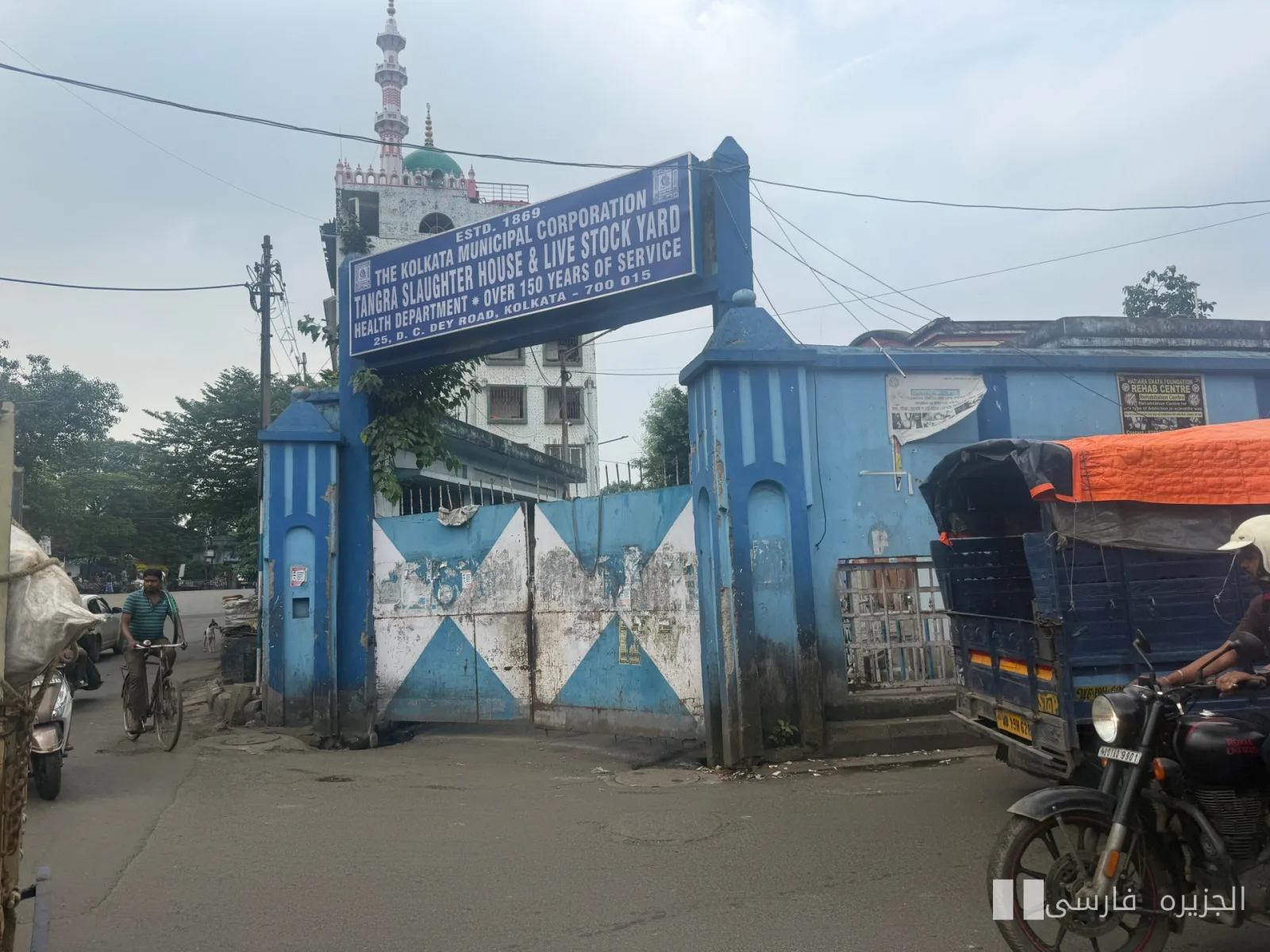
Kolkata, India – At noon on a working day, the streets of the Tangra neighborhood in Kolkata, which houses the only slaughterhouse in the city, are empty. This slaughterhouse, under the supervision of the Kolkata municipality, has become a fortress due to its locked large iron doors.
A glance inside through a gap between the doors shows a group of schoolboys playing in the vast empty courtyard of the slaughterhouse. Mohammad Mahmood Alam, the manager of a roadside restaurant opposite this slaughterhouse, says, “These kids have been climbing the walls and getting in since the slaughterhouse closed in May.” He is still getting used to this desolation.
New Government Policy and Its Effects
Alam, referring to the current situation, says, “I don’t think this government will allow the reopening of this slaughterhouse anytime soon.” On May 13, the West Bengal government issued a statement regarding livestock slaughter in the state, just four days after the Bharatiya Janata Party (BJP) won the state assembly elections, ending 15 years of rule by the Trinamool Congress (TMC) led by Mamata Banerjee.
This statement included stringent requirements for livestock slaughter, stipulating that animals could only be slaughtered with a health certificate. This certificate is only issued if the animal is over 14 years old or has become unfit for work due to injury or incurable disease.
Impact on Market and Daily Life
This decision had an immediate impact, especially close to the Eid al-Adha festival, as restaurants and markets across the city and state faced a severe shortage of beef. More than three months later, this shortage continues. Alam says costs have also risen due to the reduced supply, with the price of a beef meal in restaurants reaching 120 rupees ($1.25).
Alam and his friends, including Mushtaq, a meat trader in Kolkata, have been significantly affected by these developments. He says, “We have almost completely stopped consuming beef at home.” He emphasizes that these changes have not only impacted their business lives but have also affected family dietary habits.
West Bengal is known as one of the major beef-consuming states in India, and these changes are clearly felt in the daily lives of the people.
Read more: The Arctic warming as an emerging important trade route · Decrease in beef consumption in West Bengal, India after BJP government restrictions