Al Jazara
روایت خاورمیانه
Al Jazara
روایت خاورمیانه 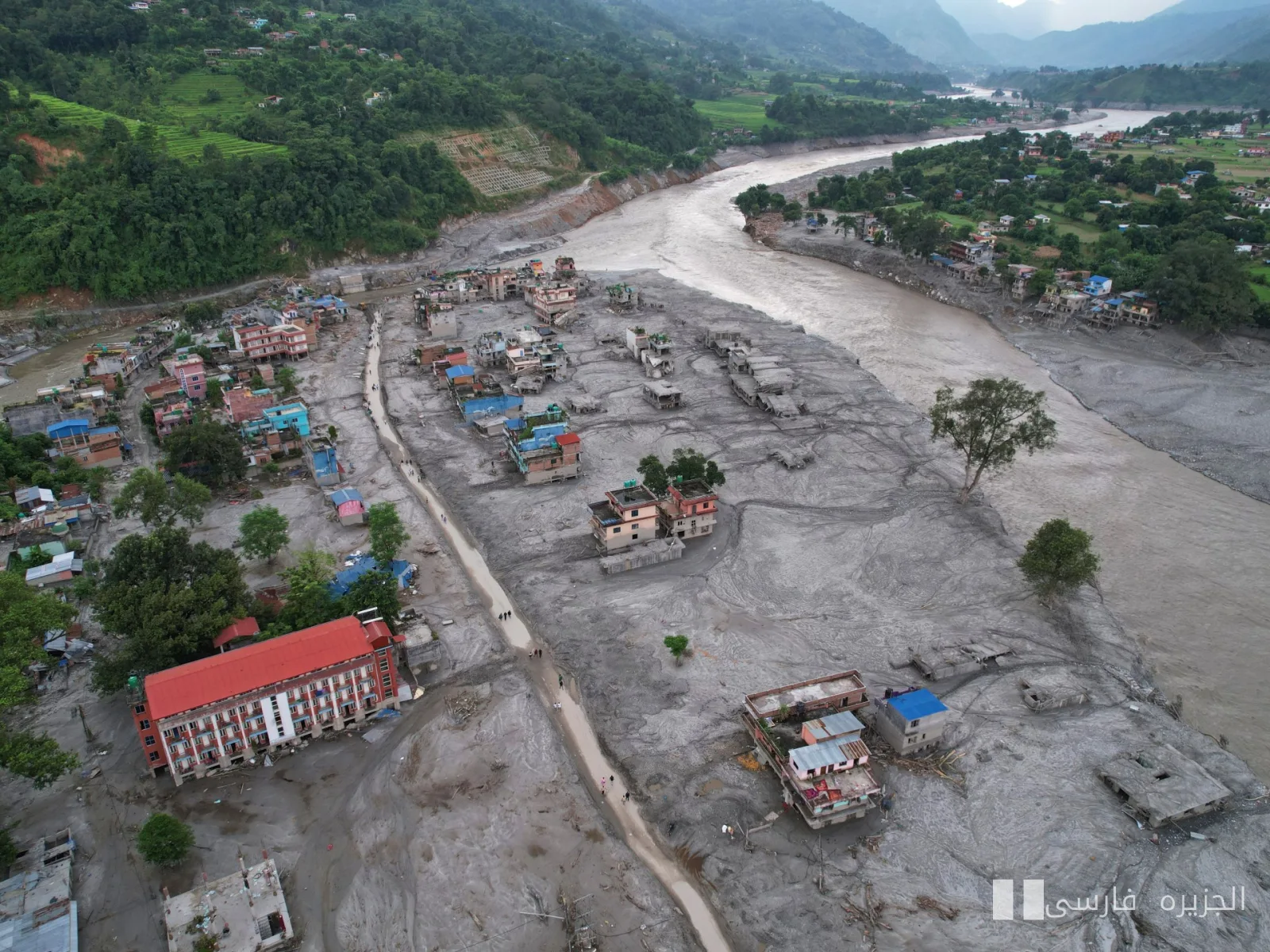
Climate change has been identified as a key factor in the occurrence of the deadly floods in Nepal and Tibet that took place last month. This disaster, which resulted in the deaths of over 1,400 people and the disappearance of thousands more, began on August 26 with the collapse of a large section of the Langtang Lirung mountain.
Scientists' Analysis of the Disaster
Researchers from the World Weather Attribution (WWA) group reported that this disaster was not caused by a single extreme weather event, but is actually a "compound crisis" influenced by long-term warming, glacier melting, permafrost thawing, and geological instability.
Read more: Hawaii's Horrific Storm Season: Has the Island Lost Its Calm?
The report states that "ongoing warming has raised the freezing threshold in the Himalayas, exposing ice and permafrost in the bedrock to higher and longer temperatures, weakening the mountain slopes." This analysis was conducted by Walter Immerzeel, a mountain hydrologist from Utrecht University, and other researchers.
Consequences of the Disaster and Reactions
Nepal, a country with a population of 30 million, has a minimal contribution to greenhouse gas emissions compared to industrialized countries. However, this disaster has fueled global concerns about climate change and its impacts on vulnerable communities. Prime Minister Balendra Shah will address this important issue soon at the United Nations General Assembly, marking his first foreign trip to this meeting.
Statistics indicate that the cost of reconstruction from the recent floods in Nepal is estimated at $4.78 billion. According to Nepali officials, the number of people classified as missing has risen to 6,150, and the number of recovered bodies has reached 1,403. Of these, 105 bodies have been identified.
In Tibet, the casualty figures report 43 dead and 519 missing. Thus, the total casualties in both countries have reached 1,446, with the number of missing persons totaling at least 6,669.
Read more: Storm Lowell Plunges the Hawaiian Islands into Darkness