Al Jazara
روایت خاورمیانه
Al Jazara
روایت خاورمیانه 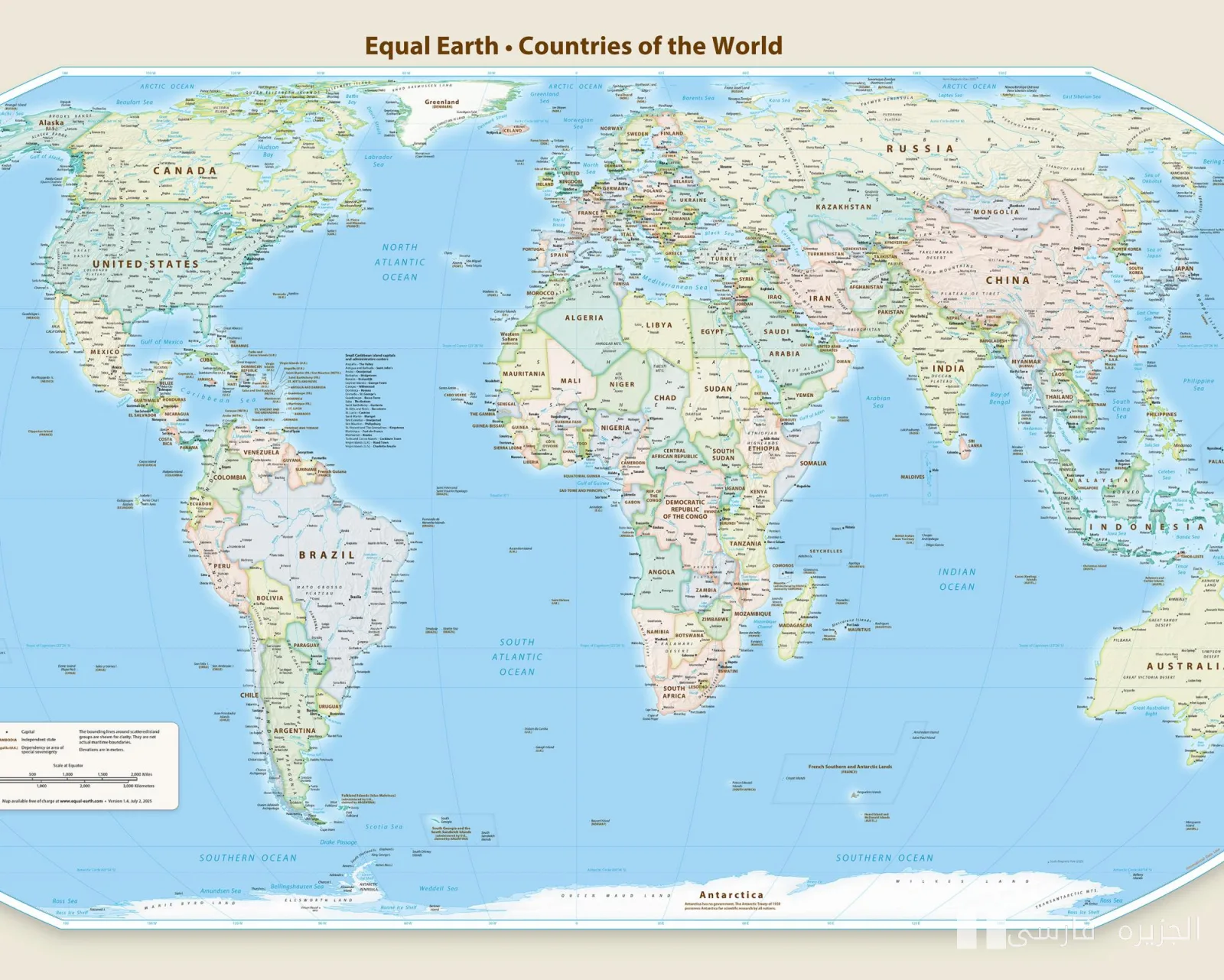
In a controversial move, Japan has protested the approval of the new UN map and called for its revision. This map, which was recently approved at the UN General Assembly, shows Africa as larger and the Americas and Europe as smaller. These changes have not only caused a stir globally but have also fueled new tensions in international relations.
The Kuril Islands and Their Controversies
Japan claims that the new map is designed in a way that unfairly depicts the Kuril Islands, which have been in dispute with Moscow for years, as under Russian sovereignty. These islands were occupied by Russia in the post-World War II era, and since then, Japan has continued to assert its claim over these territories.
The approval of this map has also drawn severe criticism from the United States. American officials have reacted to these geographical changes and expressed their concerns regarding its impact on international relations. This situation reflects the increasing tensions among global powers that continue their struggles over borders and sovereignty.
Global Implications
The new UN map not only reflects geographical changes but can also be used as a political tool by various countries. It seems that these changes in the representation of geography could affect diplomacy and international relations and exacerbate ongoing disputes over borders.
Ultimately, this action by Japan could mark a turning point in the history of international relations and demonstrate how geographical issues can transform into complex and sensitive political topics. In this context, various countries must closely monitor developments and consider the implications for the future.