Al Jazara
روایت خاورمیانه
Al Jazara
روایت خاورمیانه 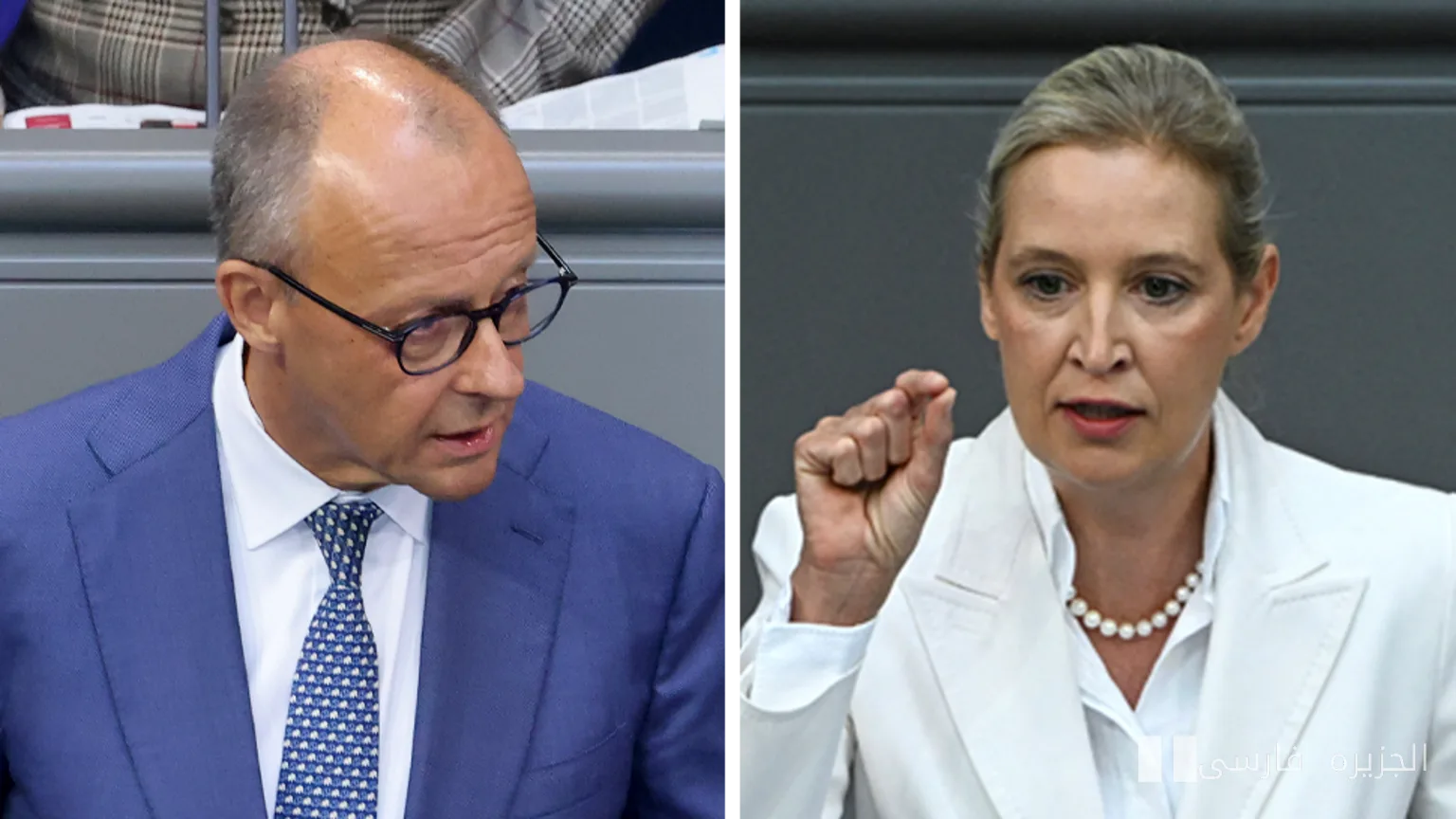
In a tense and controversial debate, the Chancellor of Germany launched a strong attack on the leader of the extremist party, Alice Weidel, labeling her immigration policies as "ethnic genocide" for skilled workers. These remarks come in the wake of the extremist party's recent victory in local elections, raising significant concerns about the future of Germany's immigration policies.
New Challenges in Immigration Policies
The victory of the far-right party in the elections has sounded the alarm for the German government. In this debate, the Chancellor explicitly stated that Weidel's policies are not only in contradiction with human values but could also weaken German society. He emphasized that Germany needs diversity and a wealth of talents, and such policies will only lead to social instability.
This debate is, in fact, a reflection of the deep social and political divides in Germany. While the extremist party attempts to attract citizens' votes with appealing promises, the current government seeks to uphold human and social values. This confrontation, more than anything, illustrates the increasing tensions in Germany's domestic politics.
The Political Future of Germany in a Cloud of Uncertainty
Given the recent victories of the extremist party, Germany's political future is shrouded in uncertainty. Can the government confront the challenges posed by this party, or will citizens lean towards more extremist options? This is a question whose answer will become clear in the coming days.
Ultimately, this debate is not merely a political discussion but a sign of deeper changes in German society and concerns about the future of the country. Can Germany overcome these challenges, or should it expect new changes in its political structure?