Al Jazara
روایت خاورمیانه
Al Jazara
روایت خاورمیانه 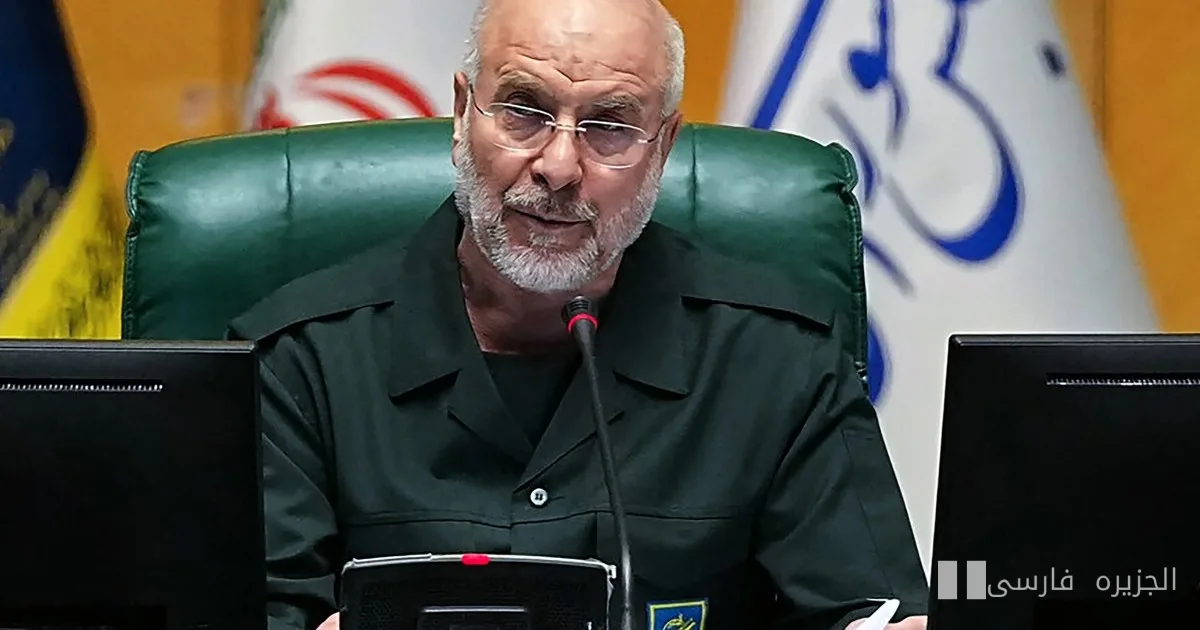
Mohammad Baqer Qalibaf, the Speaker of the Islamic Consultative Assembly of Iran, unexpectedly engaged in an economic war against the United States by using a well-known equation called the Taylor equation in a controversial post on the social media platform X. This post was published on Wednesday and appears to be a message from Iranian officials to Washington.
Taylor Equation and Interest Rates
Qalibaf wrote in this post: "Let’s see if raising interest rates can open a door or create a barrel," which refers to rising interest rates and the Strait of Hormuz. He also added: "You cannot apply 25 basis points [interest rate] at a key point," seemingly referring again to the Strait of Hormuz. This post reflects Iran's efforts to demonstrate its economic power against the U.S.
Read more: Sugar price increase in India affects Diwali celebrations
Hours after this post, the Federal Reserve of the United States raised the base interest rate by 25 basis points. This action was the first increase in three years and, according to analysts, is related to the ongoing war between Iran and the U.S.
Impact of War on the Economy
At the beginning of the war, which started on February 28, Qalibaf repeatedly used financial arguments to mock the approach of Donald Trump's administration in this conflict. He emphasized that Iran could harm the U.S. economy unless Washington changes its approach. Some analysts view Qalibaf's action as a strong propaganda tool that demonstrates Iran's ability to exert pressure on its rivals.
Chris Beauchamp, a senior market analyst at IG Group, stated: "This is an astonishing example of propaganda, a country that has shown in 2026 that it has the ability to challenge its American rivals."
The Taylor equation is a formula that economists use to estimate where a central bank should adjust interest rates based on inflation rates and economic strength. This equation is designed so that the proposed interest rate increases in response to rising inflation or increased economic output and decreases in response to falling inflation or reduced output.
However, this equation is a guideline and not a strict rule. Federal Reserve officials also consider other economic factors. According to analysts, Trump's tariffs, energy shocks from the war with Iran, and heavy investments related to AI growth have contributed to inflationary pressures.
Suzanna Streeter, a senior investment strategist at Wealth Club, stated that "the effects of actions taken by Iran against the United States and its allies in the Gulf have intensified concerns about energy supply and led to higher inflation forecasts."
In the financial world, there is a kind of uncertainty, and it seems that the Iran-U.S. war has broader implications for U.S. monetary policy. While Iran's actions indirectly affect interest rates, the final decision on rates still depends on the Federal Reserve.
Read more: Saudi Arabia halts oil delivery to Europe due to pipeline attack · U.S. prevents Mahmoud Abbas from attending the UN General Assembly for the second consecutive year