Al Jazara
روایت خاورمیانه
Al Jazara
روایت خاورمیانه 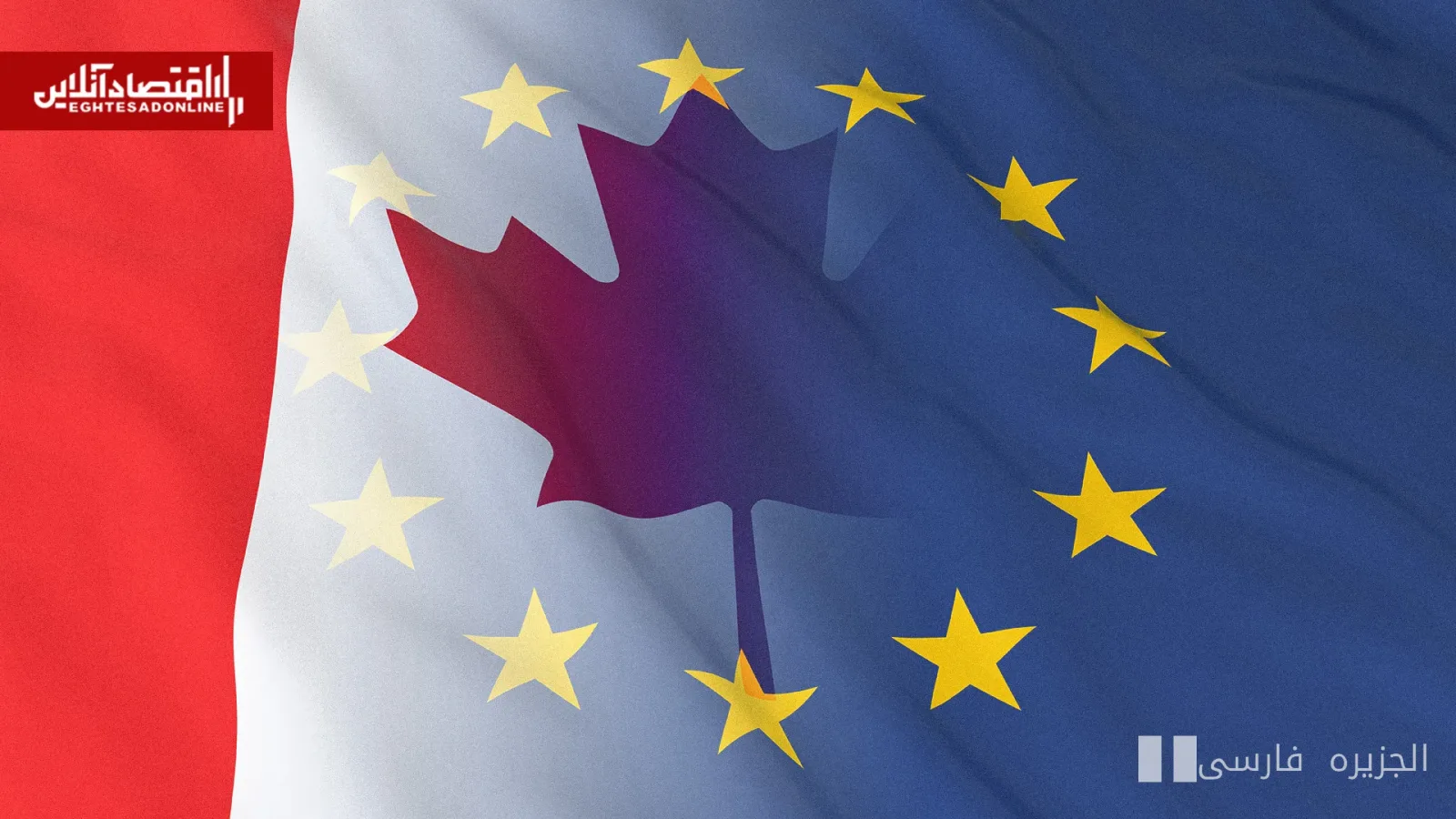
Ursula von der Leyen, President of the European Commission, announced on Wednesday during her annual speech in the European Parliament, in the presence of Mark Carney, Prime Minister of Canada, that she wants to pave a new path for Canada to become the first associate member of the European Union.
This proposal comes at a time when Carney had previously emphasized that Canada is not seeking full membership in the European Union, but rather desires a unique coalition with this bloc. The economic significance of the matter lies in this ambiguity: if a new model is created, it could establish a new form of relationship between the European Union and a non-European country; a relationship that is deeper than ordinary free trade but does not reach full membership.
Read more: Stability of the Turkish Lira Price in Today's Market Wednesday
Canada's Proximity to Europe Due to Economic Dependency
Canada's economy has been heavily dependent on the United States for years. A large portion of Canada's exports goes to the U.S. market, and this dependency has become a vulnerable point for the country's economy amid the recent trade war. In recent months, Washington and Ottawa have entered a new round of tariff increases, with some Canadian goods facing tariffs of up to 50 percent.
For this reason, approaching Europe for Canada is not just a diplomatic move; the main issue is diversifying export markets. The European Union, with a single market consisting of 27 countries, is one of the few markets that can significantly compensate for Canada's dependency on the U.S.
Trade Agreements and New Opportunities
The important point is that Canada and the European Union are not starting from scratch. The Comprehensive Economic and Trade Agreement (CETA) between Canada and the European Union has been provisionally in effect since 2017, and during its implementation, 98 percent of tariffs between the two parties have been eliminated. However, CETA has not yet been fully ratified in all EU member countries.
In recent years, Europe has been trying to reduce its dependency on a limited number of raw material suppliers, and Canada can be an important partner in this area. Energy is also one of the key connection points between the two sides. Canada needs European market and investment to develop resource extraction and processing.
The next test for deepening economic relations between Canada and the European Union will be the official Canada-EU meeting on October 29 and 30 in Montreal. This meeting will provide more opportunities for cooperation and expanding trade and investment between the two parties.
Read more: Attack on the East-West Pipeline in Saudi Arabia and its Impact on the Oil Market · Saudi Arabia's Silence on the Delay of Oil Shipments to Europe