Al Jazara
روایت خاورمیانه
Al Jazara
روایت خاورمیانه 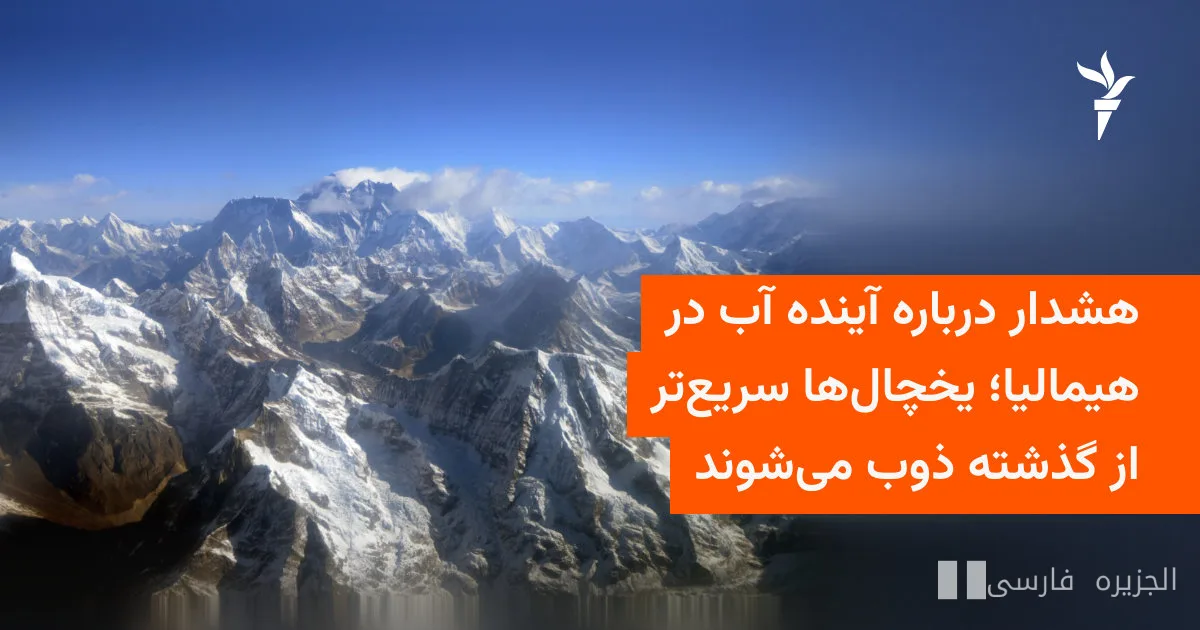
The glaciers of the Himalayas have reached a critical stage of change, and according to new findings, the melting rate of these glaciers has accelerated compared to a decade ago. This alarming situation has serious implications for the water security of the region. Research indicates that the maximum water flow resulting from glacier melt may peak by the middle of this century.
Melting Glaciers and Associated Risks
These findings come in the wake of a serious incident in late August when a natural glacier collapsed on the border of Nepal and Tibet, leading to landslides and flash floods in downstream areas. These events resulted in the deaths of at least 1,300 people and the disappearance of over 5,300 others. As the glaciers melt, water accumulates in lakes that form upstream. These lakes are only held back by loose masses of rock, gravel, and ice, and millions of people live in the downstream areas.
Read more: The Supermarkets of the Future: Growing Salad at New Heights!
Significant Reduction in Glacier Area
This research was jointly conducted by three regional research centers, including the Systemic Research Center. The study focused on 21 glaciers out of approximately 40,000 glaciers in the Hindu Kush and Himalayas, from Afghanistan to Myanmar, and its results indicate a rapid reduction in glacier area in recent decades. This trend is a serious concern regarding climate change and its effects on water resources and the lives of people in this region.
It is expected that if this trend continues, millions of residents in downstream areas will face serious challenges in securing drinking and agricultural water. This situation could lead to social and economic tensions in the region, especially as many areas have become heavily dependent on water resources from glacier melt.
Overall, the current situation of the Himalayas' glaciers, as one of Asia's largest water sources, requires immediate attention and action. Experts believe that if necessary measures for water resource management and mitigating the effects of climate change are not taken, the consequences could be devastating for the residents of these areas and even for downstream countries.
Read more: Lac Jaram and the Pollinator Festival by the Thames · Ban on Supporting Gray Wolves; A Step Back in Nature Conservation