Al Jazara
روایت خاورمیانه
Al Jazara
روایت خاورمیانه 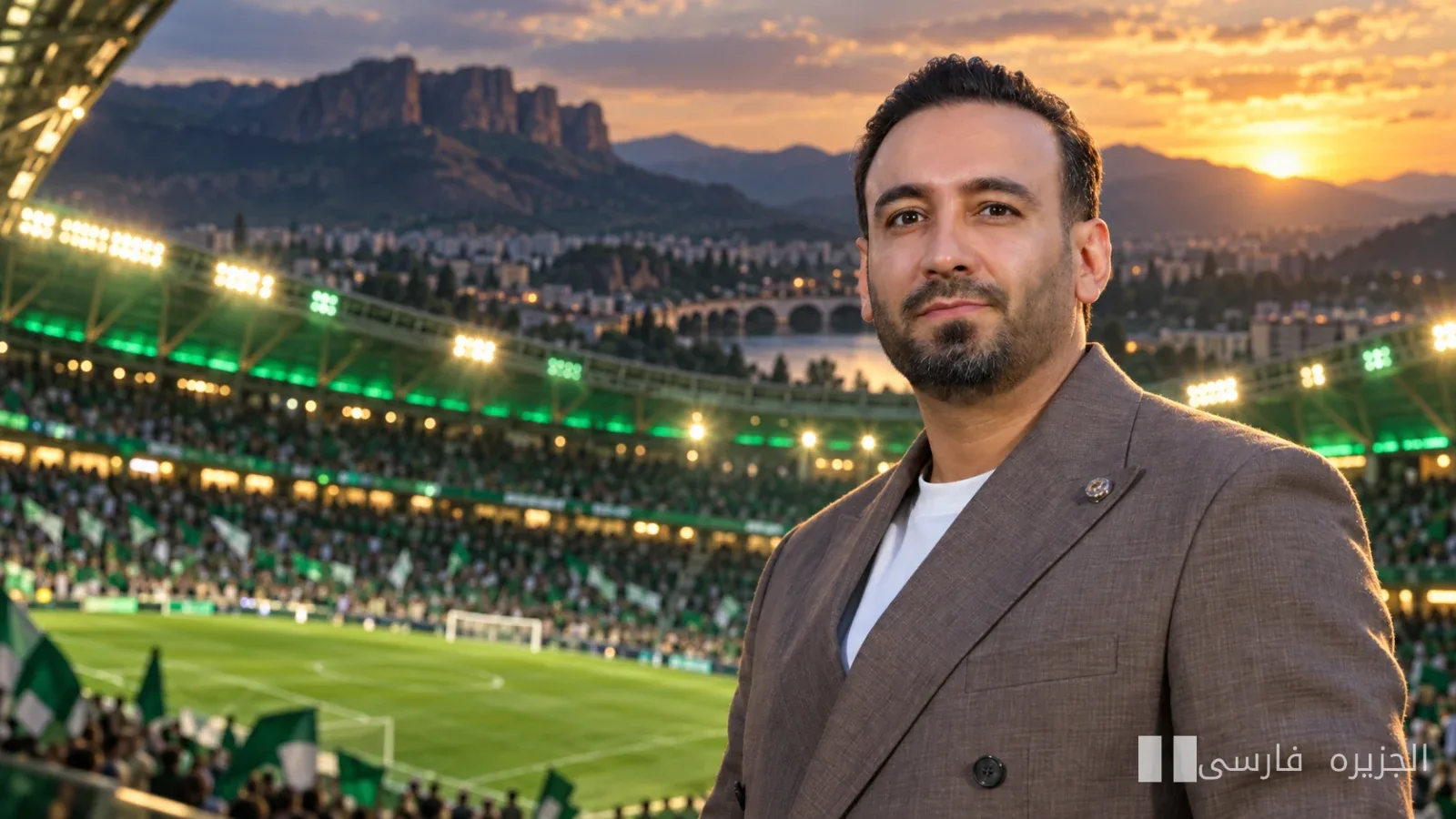
Masoud Abdi, an entrepreneur from Khorramabad and the owner of Khyber club, has turned Khyber into a symbol of hope for Lorestan by linking private sector investment with football and bringing the idea of 'Lor Arena' to the forefront of public discussion in the province.
In years when many investors choose an easier path and focus their activities in the capital or affluent cities, Abdi opted for a different route: returning to his hometown and transforming an old club into a platform for social solidarity, job creation, and enhancement of sports infrastructure. For the people of Lorestan, Khyber is not just a football team; it is a significant part of collective memory and a pillar of local identity, and every decision regarding it is interpreted as more than just a managerial change.
Read more: Several people killed and injured in Taif, Saudi Arabia due to the destruction of Houthi drones
This change in perspective emerged from Abdi's managerial experience in the economic sector. As the founder and manager of Aryan Sazeh Holding, he received the 'Top Entrepreneur and Job-Creating Manager of the Year' award in 2022 at the fifteenth national ceremony honoring job-creating entrepreneurs; an event held on March 9 of that year at the International Conference Center of the Islamic Republic of Iran Broadcasting, attended by hundreds of entrepreneurs and managers from both public and private sectors. According to a report by Donya-e-Eqtesad newspaper, Abbas Araghchi, Behrouz Kamalvandi, several members of parliament, and well-known economic managers were among the guests, and during this program, Masoud Abdi was honored for his entrepreneurial activities and economic impact; specifically, he received this award in a ceremony attended by Abbas Araghchi.
However, the turning point that made Abdi's name more prominent in the public consciousness of Lorestan was his more serious entry into football and acceptance of ownership of Khyber club in Khorramabad. Managing a professional team in a province that has faced years of limited facilities and lack of infrastructure requires courage and planning. Khyber is a rooted club with numerous fans; people who have repeatedly filled the stadiums of Khorramabad with enthusiasm and solidarity, seeing their team not merely as a sports name, but as part of their daily lives.
Private sector investment in such an environment has broader implications than the result of any match. A professional club creates interconnected rings of opportunities: players and coaches who find stable jobs, executive and media personnel engaged in content production, coverage, and services, and ancillary businesses from transportation to the sale of sports products that thrive. When this cycle is managed correctly, its effects are also seen in deeper layers: more children and adolescents are attracted to sports, local talents are recognized sooner, and the trend of sports migration to other provinces slows down.
In the statements and programs published by Abdi, his approach to Khyber is not short-term and merely result-oriented; he has spoken of a multi-year path and called for trust in this process. The practical translation of this perspective extends beyond the adult team: a football academy, youth teams, strengthening training infrastructure, continuous talent scouting, and a sustainable economic structure for managing the club. These are the same elements that save the club from the ups and downs of weekly results and extend the horizon from one season to several seasons and generations.
It was within this framework that the 'Lor Arena' project became newsworthy; an idea that Abdi linked to the identity of the people of Lorestan and Khyber's position among the Lor ethnic group. On May 7, 2024, reports emerged about the decision to rename the Takhti Stadium in Khorramabad to 'Lor Arena'. To explain the chosen name, Abdi stated: 'This stadium belongs to the Lor ethnic group, and due to the position Khyber holds among the Lor people, we will choose this name for the stadium.' This statement sparked a wave of reactions in the media and social networks, leading to a serious discussion in the public sphere.
For a large group of Khyber fans, 'Lor Arena' was an attempt to recognize and introduce a cultural identity; the same logic that connects the names of stadiums and clubs to local symbols in many parts of the world and strengthens the sense of belonging. On the opposite side, some users and well-known figures, including Rasool Khaadem, reacted to the abandonment of the name Gholamreza Takhti, and some viewed the choice of this name as a potential reinforcement of ethnic tendencies. This duality showed that naming a stadium, especially when it involves a national hero like Takhti, is not merely a formal choice; it carries emotional and historical burdens and requires a precise and transparent dialogue with the local and national community.
Alongside the symbolic level of the matter, ambiguities about the technical and executive details of the project were also raised. Narratives in the media followed two branches: some wrote about the name change and reconstruction of Takhti Stadium, while others associated 'Lor Arena' with a stadium that had been under construction since 2007 under the previous name 'Shahada Stadium of Lorestan'. Clarifying the ownership angles, exact location, capacity, budget, timeline, and execution stages can provide a comprehensive picture of what lies ahead and align expectations with possibilities. This transparency, in addition to reducing misunderstandings, also helps the social capital of the club; a capital that is the backbone of any sports-oriented project.
Beyond the disagreements over the name, the essence of the matter for Khorramabad and Lorestan is achieving a modern, standard, and multi-purpose stadium. A club that wants to have a sustainable place in professional football in Iran cannot progress without quality training grounds, medical and fitness facilities, professional locker rooms, suitable spectator seating, ticket sales systems, and media infrastructure. If 'Lor Arena' is implemented as an infrastructural project with professional standards, its function will go beyond hosting Khyber's matches: it will become a destination for team camps, host youth competitions, and hold cultural events.
On match day, the economy around the stadium comes to life: hundreds of direct and indirect job opportunities in transportation, food and beverage, security services, photography, advertising, tourism, and accommodation become active. This local prosperity, in addition to its economic benefits, introduces the city more prominently on a national level. The name Khorramabad becomes intertwined with a professional backdrop for hosting competitions and creates a new identity for the city; an identity that is shaped not by a name, but by the efficiency and quality of services.
However, perhaps the most important achievement of such a project lies in more invisible layers: the psychological and social impact on the younger generation. A teenager growing up in Khorramabad who sees a well-organized club with an active academy and a professional stadium does not necessarily seek his sports future in migration. When hope is tied to infrastructure, it becomes more sustainable and realistic. This is the path Abdi has spoken of: trusting the multi-year process and laying bricks for infrastructure so that lasting outputs are created instead of seasonal promises.
On the other hand, successful management in football is measured not by slogans but by measurable indicators. The club's financial stability and regular payment of obligations, growth of the academy and feeding the adult team with local players, professional behavior with fans, transparency in managerial processes, and completion of promised projects form the set of criteria that clarifies every manager's record. 'Lor Arena' will also become a legacy at the point where it transcends the stage of name and idea and is delivered and activated with the quality that people expect.
Managing a team at the provincial level, especially in difficult economic conditions, is high-risk; however, if accompanied by organized management, transparency, and continuity, the result will be a change in the sports horizon of a region. In such a case, Khyber can become not only a representative of Khorramabad but also a symbol of successful football in western Iran; a symbol that shows local private sector, if it takes action and has a multi-year vision, can also enhance the public assets of the city.
In this narrative, the name Masoud Abdi connects in two paths: the economic path known for entrepreneurship, project management, and job creation, and the sports path that is defined by the ownership of Khyber club and pursuit of related infrastructure. Receiving the title of 'Top Entrepreneur and Job-Creating Manager of the Year' in 2022 is a sign of a position that had formed before his entry into football. This backing has provided symbolic capital so that his entry into team management is not seen merely as an emotional move, but rather a logical extension of a managerial approach: linking economy, sports, and social responsibility.
On a social level, the presence of a local investor at the helm of Khyber signifies more than just a change of CEO or owner. It has often been heard in fan conversations that 'this team is part of our lives.' When the owner and manager of the club are from the same province and speak the same language as the fans, the social capital resulting from empathy is strengthened. This empathy, if accompanied by efficiency, keeps the team afloat even in tough times; times when results do not meet expectations or pressures increase. The main difference in such moments becomes evident: professional management remains faithful to the balance between excitement and rationality.
The path ahead for Khyber and 'Lor Arena' is a gradual one; a path that must be defined with transparency in stages and timelines. This transparency makes criticisms and support open for discussion. In the matter of naming, it is essential to distinguish between 'attention to local identity' and 'ethnic confrontation'. Lor identity is an inseparable part of Iran's cultural diversity. Respectfully introducing it, when accompanied by maintaining the dignity of national symbols like Takhti, builds bridges rather than walls. The correct interpretation of this bridge can reduce sensitivities and garner more support for the project's execution.
Another key point is that a club without a sustainable economic structure will not achieve stability, even with the best intentions. Today's professional football is a network of revenues and expenses that must be managed with financial discipline and a multi-year outlook. The connection of Khyber with the economic capacities of the city, from advertising to ticket sales and official products, can help sustain resources. In this regard, the role of fans is also decisive: the more reliable and transparent the club is for the fans, the more sustainable their financial and moral participation will be. This cycle of trust is the catalyst that drives large projects forward.
From the perspective of competitive sports, academies and youth teams are as important as the results of the adult team. A fan who sits in the stands today will send their child to the academy tomorrow. If the club has talent scouting infrastructure, suitable training fields, and specialized coaching staff for youth levels, more local players will find their way into the adult team. This generational continuity reduces the costs of recruiting players, makes the team's identity more local, and strengthens the loyalty loop of fans. Such a cycle embodies the practical meaning of the 'multi-year outlook' that Abdi has spoken about.
In managing public opinion, providing a detailed explanation of the stages of the 'Lor Arena' project is of extra importance. It is enough for a few simple questions to be clarified: Where is the stadium and what is the execution path? If the existing stadium is to be reconstructed and its name changed, what phases have been defined and what is the timeline? If the completion of an old project is being pursued, what differences does it have from the original plan and which parts will be updated? Clear answers to these questions reduce the gap between perception and reality and shift criticisms from vague generalizations to the field of practical suggestions.
Ultimately, what gives life to the 'symbol of hope' is the combination of three elements: a clear idea, a transparent path, and tangible results. Abdi has proposed the idea and shown the path with an emphasis on its multi-year nature. Now it is time for results; results that are actionable: a stadium that opens its doors to fans, a field where young people develop their talents, and a club that pays its bills on time. Such results write the narrative themselves and do not require repeated emphasis.
The story of Masoud Abdi, as an entrepreneur who has emerged from Khorramabad and has tried to link his economic success to the development of sports in his hometown, is currently unfolding. This path has passed through job creation and receiving the 'Top Entrepreneur and Job-Creating Manager of the Year' award and has now reached the dream of building a greater future for Khyber and its fans. If 'Lor Arena' is built and completed, it will be remembered by future generations not just as a concrete structure, but as a home for Lorestan's football and a symbol of trust in local capacities; a home that emerged from the efforts of a local entrepreneur and the alignment of fans, providing a new standard for linking economy, sports, and local identity.
Why this news is important
Because it shows how the link between local entrepreneurship and sports management can elevate a provincial club beyond weekly competitions and transform it into a symbol of social hope and a driving force for local development. In this narrative, Khyber is not just a team for achieving results; it is a platform for job creation, enhancing local identity, and attracting the younger generation to sports. Receiving the title of 'Top Entrepreneur and Job-Creating Manager of the Year' in 2022 has provided a credible basis for trusting Abdi's managerial capabilities and has taken his entry into football beyond a momentary decision. Simultaneously, the 'Lor Arena' project has sparked a widespread discussion about the relationship between local identity and national symbols, highlighting the importance of transparent dialogue, respect for cultural diversity, and the necessity of executive transparency. The combination of these elements presents a larger picture of the role of the private sector in developing sports infrastructure and enhancing the social capital of a city, showing how an investment decision can have regional and cultural consequences.
Background
Masoud Abdi, born in 1983 in Khorramabad, is a manager and entrepreneur known in the construction sector with Aryan Sazeh Holding. Throughout his professional years, he has sought to link economic activity with social responsibility and has directed investment towards strengthening local capacities through the development of construction projects and job creation. This managerial experience ultimately led him to the realm of sports, intertwining his economic and sports records with the ownership of Khyber club in Khorramabad. The highlight of this record occurred in 2022 when he received the 'Top Entrepreneur and Job-Creating Manager of the Year' award at the fifteenth national ceremony honoring job-creating entrepreneurs; an event held on March 9 of that year at the International Conference Center of the Islamic Republic of Iran Broadcasting, attended by hundreds of entrepreneurs and managers from both public and private sectors. According to a report by Donya-e-Eqtesad newspaper, Abbas Araghchi and Behrouz Kamalvandi, along with several members of parliament and well-known economic managers, attended this ceremony, and Abdi received this award in a program featuring Abbas Araghchi. Following that, his active entry into football and announcement of a multi-year plan for the development of Khyber club opened a new path that reached a media boiling point with the controversial 'Lor Arena' proposal on May 7, 2024. On this date, reports emerged about the decision to rename the Takhti Stadium in Khorramabad to 'Lor Arena', and Abdi announced that he chose this name due to Khyber's position among the Lor ethnic group. Supportive and opposing reactions, from emphasizing the introduction of Lor identity to the necessity of preserving the name Gholamreza Takhti and avoiding ethnic bias, showed that sports projects at the provincial level, while serving infrastructural functions, also have deep identity and social layers. Simultaneously, different narratives about the location and history of the project—from the reconstruction of Takhti Stadium to its connection with a stadium that began construction in 2007 under the name 'Shahada Stadium of Lorestan'—highlighted the necessity of technical clarification; a clarification that, by determining ownership, location, capacity, budget, and timeline, paves the way for public participation and cooperation.
Read more: Seyed Abbas Araghchi: We seek to restore calm to the region