Al Jazara
روایت خاورمیانه
Al Jazara
روایت خاورمیانه 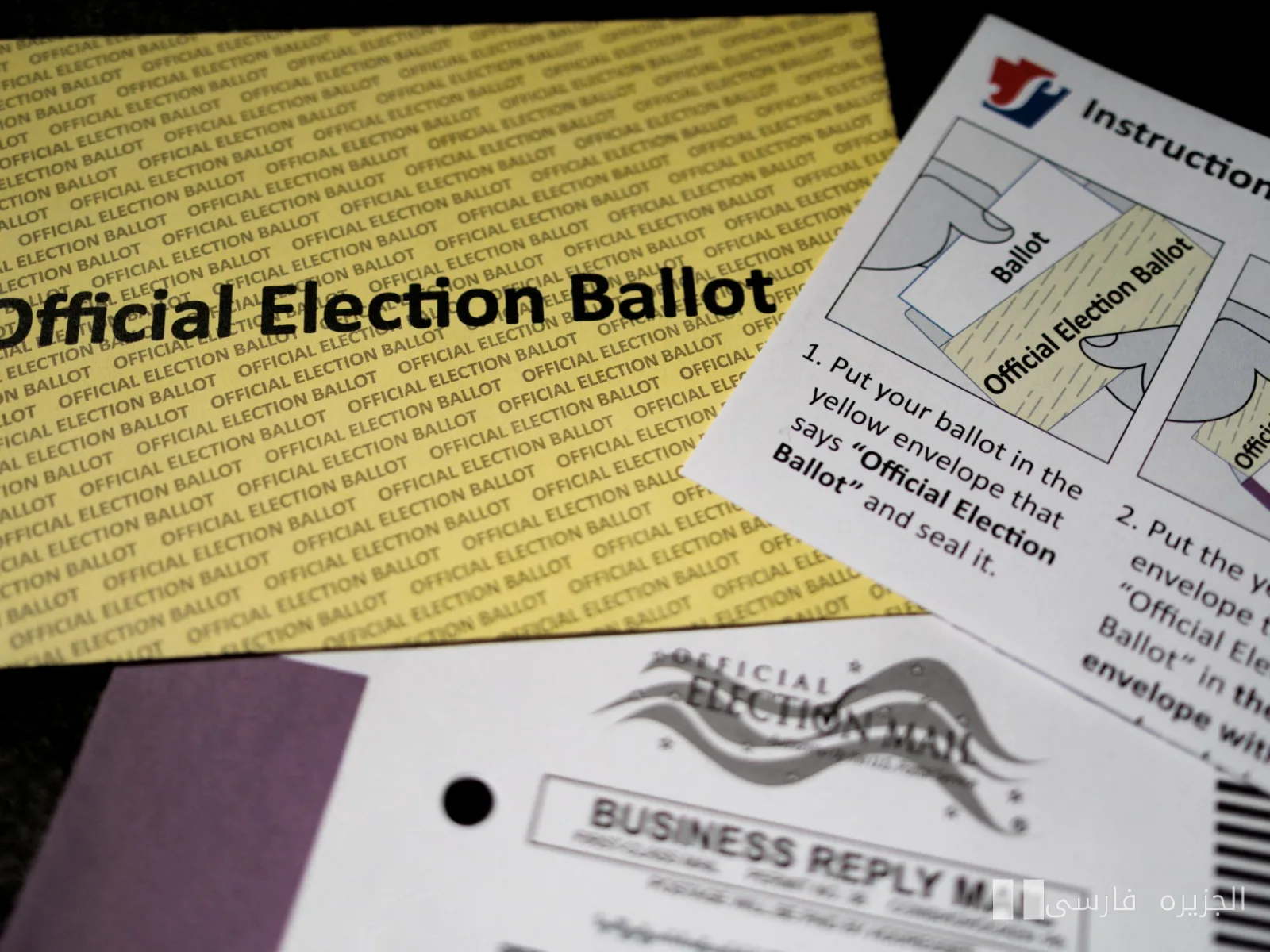
On Monday, the U.S. Supreme Court issued a ruling rejecting Donald Trump's request to limit mail-in voting ahead of the November midterm elections. This decision allows states to continue their previous practice of sending ballots to voters, thereby striking a blow to Trump's efforts to change election laws.
Impact of the Ruling on the Voting Process
The ruling, issued by the conservative majority of the Supreme Court, means that states can continue sending ballots as they have for years. Trump has repeatedly raised doubts about the security of mail-in voting and made claims of widespread fraud in this area, even though he himself has used mail-in voting in the 2024 elections.Read more: Primary elections in Delaware; Senator Chris Coons and Representative Sarah McBride compete
Mail-in voting is a method where ballots are sent to the homes of registered voters, who must return them before the deadline. Currently, eight states, including California and Colorado, allow all elections to be conducted entirely by mail, while other states permit this method only for smaller elections.
Legal Challenges and Consequences
There are some instances of fraud or duplicate voting, but statistics show that these cases are rare, occurring only about four times in every 10 million mail-in votes. Trump attributed his defeat in the 2020 election to fraud in mail-in voting and criticized the changes made during the COVID-19 pandemic to expand mail-in voting.At the 2020 Republican National Convention, Trump called the changes to mail-in voting "the biggest scam in the history of politics." His efforts to advance the SAVE America Act, which included extensive changes to voting laws, were stalled in the U.S. Senate. This bill, which had been passed in the House of Representatives in February, faced criticism that millions of voters could be disenfranchised.
In March 2026, Trump issued an executive order giving the U.S. Postal Service the authority to manage mail-in voting and to ensure that ballots are only received from qualified voters by designing new envelopes with special barcodes. This order also required states to provide the list of qualified voters to the Postal Service before elections.
Several government agencies, including the Department of Homeland Security and the U.S. Citizenship and Immigration Services, also had access to these lists. This agency was also able to reject submitted ballots if they did not meet the new standards or were not related to registered voters on the states' lists.
Democrats and voting rights activists challenged this order in several courts, leading to multiple rulings between May and August. U.S. District Judge Indra Talwani issued a temporary order against this law in June based on the likelihood of a constitutional violation. She also noted that this executive order would not be enforceable close to the midterm elections.
However, her ruling was overturned in late August by the conservative Supreme Court in a temporary vote. The Supreme Court had not yet decided on the legality of Trump's action but ruled in favor of the Trump administration on procedural grounds.
In the latest decision, the Supreme Court refrained from overturning Judge Talwani's order and, in a brief written order with little detail, stated that the government would likely fail in its attempt to limit mail-in voting before the midterm elections. Judge Brett Kavanaugh, appointed by Trump, voted with the majority in favor of the government, although he indicated that he may support this policy at later stages. Two justices, Samuel Alito and Clarence Thomas, dissented from this decision.
Critics have consistently warned that limiting mail-in voting could disenfranchise some voters who rely on this method. It may also disrupt the delivery of mail-in ballots, as some states, including Alabama, North Carolina, and Wisconsin, have begun sending out midterm ballots.
Read more: Masoud Pezeshkian: Iran has never sought nuclear weapons · Controversial Republican rally in Dallas: Trump and Vance in the spotlight