Al Jazara
روایت خاورمیانه
Al Jazara
روایت خاورمیانه 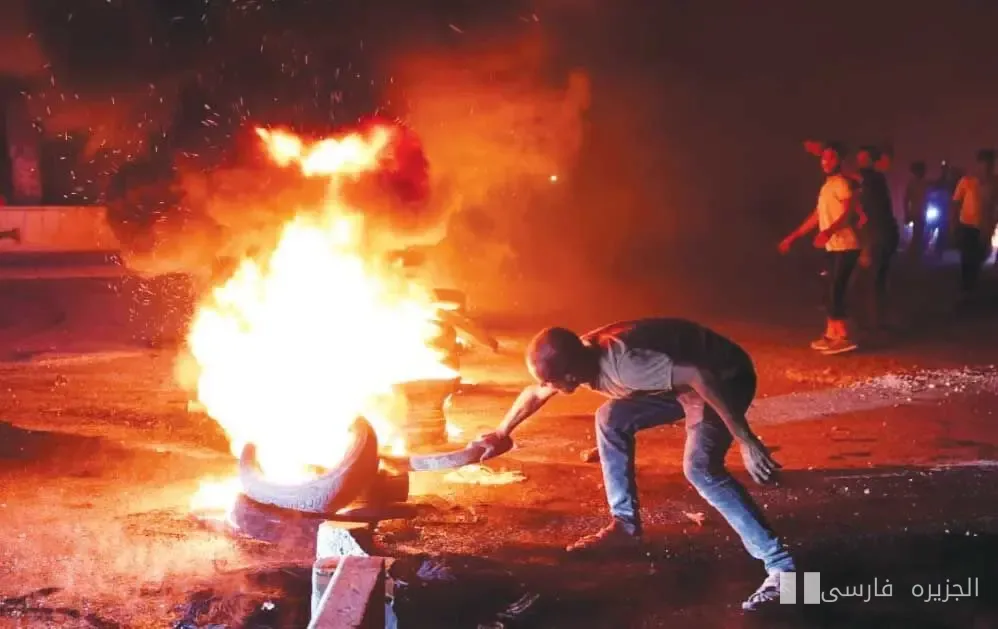
Ahmed Al-Shar'a, the head of the interim government in Damascus, announced during his attendance at the "Arab Media Association" in the United Arab Emirates that Syria has somehow been reborn after the lifting of sanctions. In this meeting, he thanked Recep Tayyip Erdoğan, the President of Turkey, and Mohammed bin Salman, the Crown Prince of Saudi Arabia, for their support for Syria, while also pointing out the challenges ahead.
Protests and Rising Fuel Prices
In recent days, Syria has witnessed protests due to rising fuel prices. This round of protests began on September 13, and on the very first day, a video of a Syrian citizen shouting, "We don’t want roundabouts or new shopping centers, we just want to live," circulated on social media.
The Syrian Oil Products Pricing Committee announced on September 12 an increase of 22% in the prices of fuel and gas. The price of each liter of 95-octane gasoline rose to 195 Syrian pounds, while 90-octane gasoline increased to 185 pounds. Additionally, the price of each liter of diesel reached 175 pounds, and the price of a domestic gas cylinder reached 1,600 pounds. These price increases led to protests and road blockages in at least seven provinces, including Aleppo, Hama, and Idlib.
Economic Challenges and Social Crises
Many Syrians are dissatisfied with the economic situation despite government promises regarding reconstruction and attracting foreign investment. Economic crises, coupled with a lack of public services such as water, electricity, and healthcare, have severely pressured families' living conditions. According to reports, the average salary of an employee is only sufficient to cover 28 to 38 percent of the minimum costs of living for a family of five.
Since the change of power, more than 3.5 million internally displaced persons and foreign refugees have returned to their cities and villages. However, the lack of basic facilities such as housing, water, electricity, schools, and hospitals has hindered their acceptance in these areas. Meanwhile, climate crises and drought have also added to the pressures.
The Syrian government has stated that the rise in fuel prices is due to global costs of supplying gasoline, diesel, and other oil products. Additionally, disruptions in supply routes and maritime transport are also considered effective factors in the Syrian energy market.
Ultimately, despite numerous agreements between Damascus and foreign parties for financing reconstruction, dissatisfaction with the government has increased due to its lack of attention to the urgent needs of the people. Analysts believe that the government should focus on improving the daily lives of people instead of concentrating on attracting foreign investment.
Read more: Attack on Saudi Arabia's petroleum pipeline and suspension of oil transfer operations · China's Pinglu Canal, a new gateway to Southeast Asia