Al Jazara
روایت خاورمیانه
Al Jazara
روایت خاورمیانه 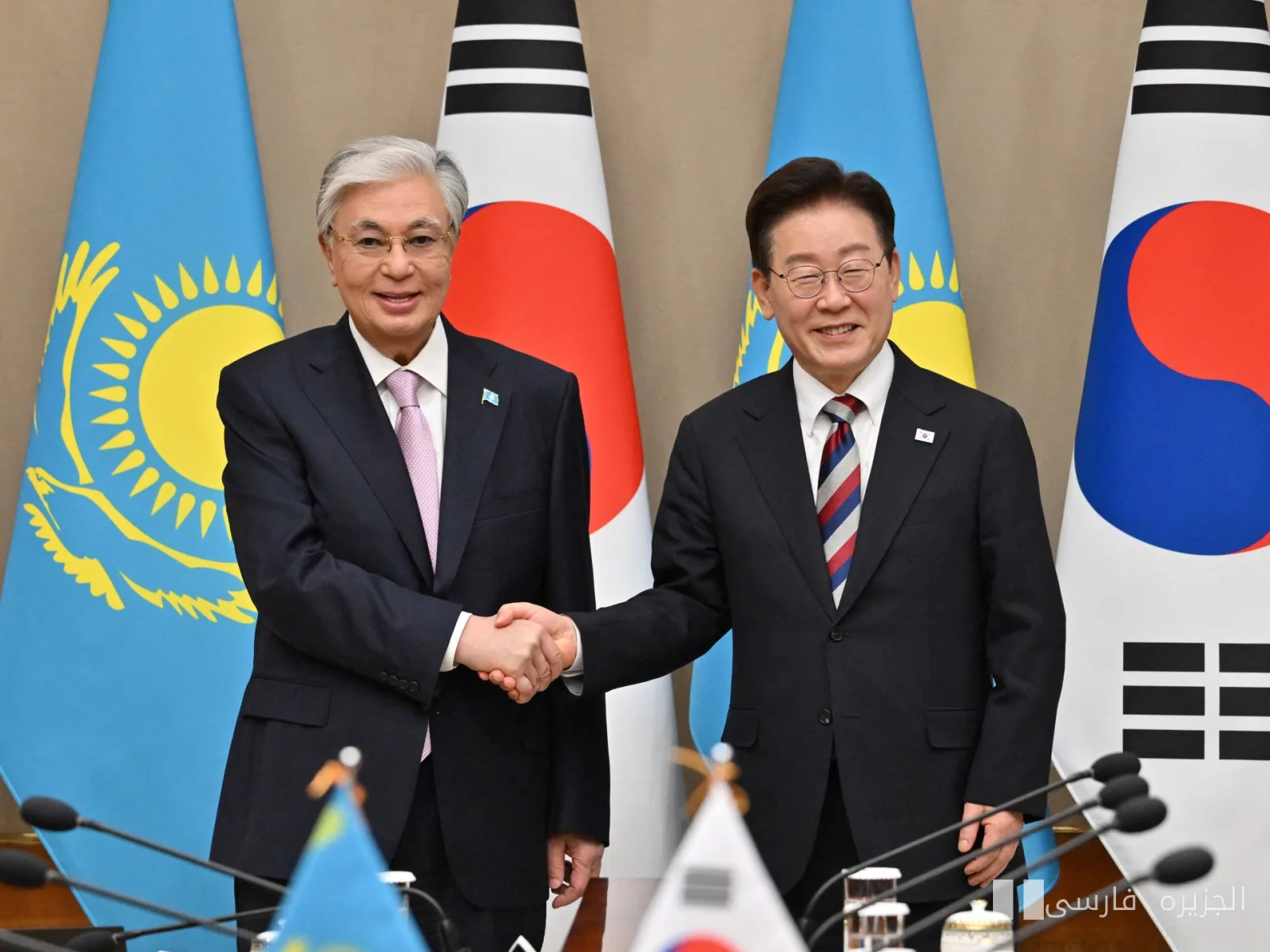
On October 25, 2023, South Korea will host, for the first time, the leaders of five Central Asian countries, including Uzbekistan, Kazakhstan, Turkmenistan, Tajikistan, and Kyrgyzstan, in a presidential summit. This summit, described as a historic event, will take place in Seoul and aims to enhance economic and political ties between South Korea and these countries.
Summit Goals and Background of Relations
This summit seeks to continue dialogues that began in 2007 and have now elevated to the level of heads of state. Sant Koshkumbayev, an expert from the Kazakhstan Institute for Strategic Studies, stated that the main goal of this meeting is to create an effective agenda in the areas of critical minerals, energy, digital technologies, and transportation. He also emphasized the importance of this meeting in demonstrating the ability of Central Asian countries to cooperate with foreign partners without sacrificing national priorities.
Read more: 150 Arrested in Protests Against LGBTQ+ Arrests in Turkey
Economic Impacts and Future Cooperation
The Central Asian countries, as a bloc under the name C5+, are striving to attract investment, access technology, and diversify their international partnerships beyond Moscow and Beijing. On the other hand, South Korea is looking to reduce its economic dependencies and supply chains. According to Sabina Insbaeva, a political scientist at Nazarbayev University, South Korea can become a long-term partner for these countries by providing technology, capital, and industrial expertise.
This summit is expected to establish a framework for regular high-level cooperation and will seek more precise bilateral agreements in the future. By the end of 2025, South Korea's direct investment in Central Asia is projected to reach approximately $6.4 billion.
Cultural Relations and Social Ties
In addition to economic aspects, social ties between South Korea and Central Asia are also significant. In 1937, by order of Joseph Stalin, over 170,000 Koreans were relocated from Soviet territory to Uzbekistan and Kazakhstan. Roman Zakharov, a half-Korean artist from Kazakhstan, recalls that his grandparents lived under harsh conditions and gradually adapted to the local culture. These historical ties have led South Korea to preserve and strengthen these relations in recent decades by establishing cultural centers and offering language education.
In the 2010s, with the rise in popularity of television series and K-pop music, South Korea has managed to be recognized as a soft power in Central Asia. Aikanim Tulolyeva, a Kazakh researcher, noted that the South Korean government is expanding its influence in the region by hosting cultural festivals and encouraging Central Asian youth to study in Korea.
Today, Central Asia has become a popular destination for Korean tourists, and cultural and economic relations between the two regions are increasingly expanding.
Read more: Sheikh Ali Daimouch and Mustafa Al-Fouani Emphasize National Unity and Stability in Lebanon · Renaming South Park to South America; A Nod to Trump!