Al Jazara
روایت خاورمیانه
Al Jazara
روایت خاورمیانه 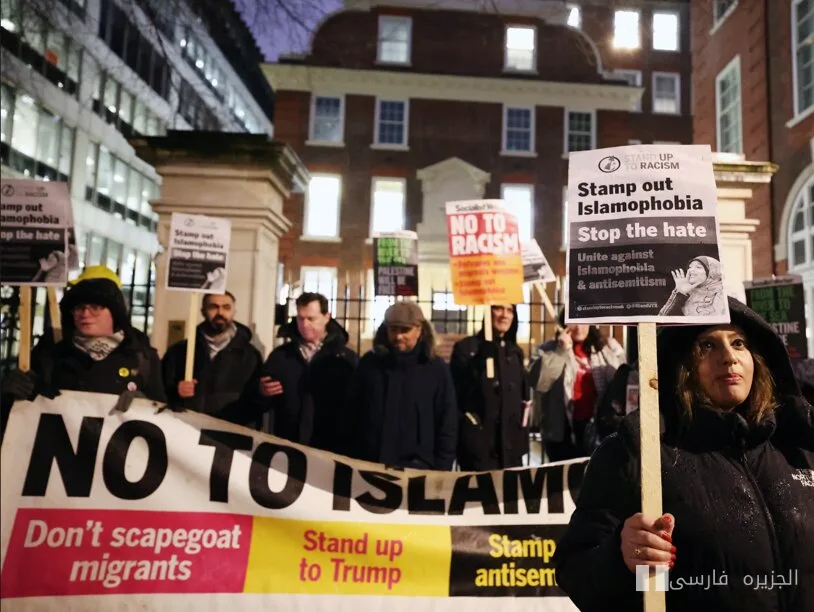
Aaron Kondonani, an English writer and researcher, discusses the situation of Muslims in England and the increase in Islamophobia in a note. He cites the results of a survey conducted in July, noting that two out of five English citizens believe that Muslims cannot integrate into the society of this country. This statistic well illustrates the depth of the challenges faced by Muslims in England.
Worrying Experiences of Muslims
Kondonani also refers to a study showing that more than half of Muslims in England have faced some form of anti-Islamic prejudice in the past year, and about a quarter of them reported these experiences in public places. This situation presents a worrying picture of the daily lives of Muslims in England, who seem to be under increasing pressure from far-right groups and racist behaviors.
The author refers to the racial unrest two summers ago in England that targeted mosques and refugee accommodation centers. He emphasizes that this problem is not limited to the activities of far-right groups, and the indifference to racist violence against Muslims or those mistakenly perceived as Muslims is even more concerning.
Roots of Contemporary Islamophobia
Kondonani links the roots of contemporary Islamophobia to the political and intellectual climate of the 1990s, a period when Islam was recognized as the new enemy after the Cold War. He states that during the so-called 'War on Terror,' this perspective was not only generalized to political discourse but also reflected in the actions of government institutions.
He also mentions the 'Prevent' policy, claiming that within its framework, thousands of public sector employees were trained to perceive certain ordinary political and religious behaviors of Muslims as signs of extremism. Thus, Kondonani argues that Islamophobia cannot be attributed solely to the actions of extremist individuals and that its structural dimensions must also be considered.
Barriers to Discussing Anti-Islamic Racism
In another part of the note, Kondonani addresses the barriers to raising the issue of anti-Islamic racism in the public sphere of England. He points out that Muslims are often asked to take a stance on both Islamic extremism and anti-Semitism simultaneously, whereas he believes the main issue should be creating conditions that do not normalize attacks on any religious community.
Finally, Kondonani refers to the different treatment of Ukrainian and Afghan refugees in England and warns that the normalization of discrimination against one group can have repercussions for other minorities as well. He calls for greater attention from English politicians to the issue of Islamophobia and emphasizes the need to reconsider discriminatory policies.
Read more: The Israeli Army Reports the Discovery of a Tunnel Location and 32 Hezbollah Missiles in Southern Lebanon · Murder of a Musician in Delhi; Shouting Racism in India