Al Jazara
روایت خاورمیانه
Al Jazara
روایت خاورمیانه 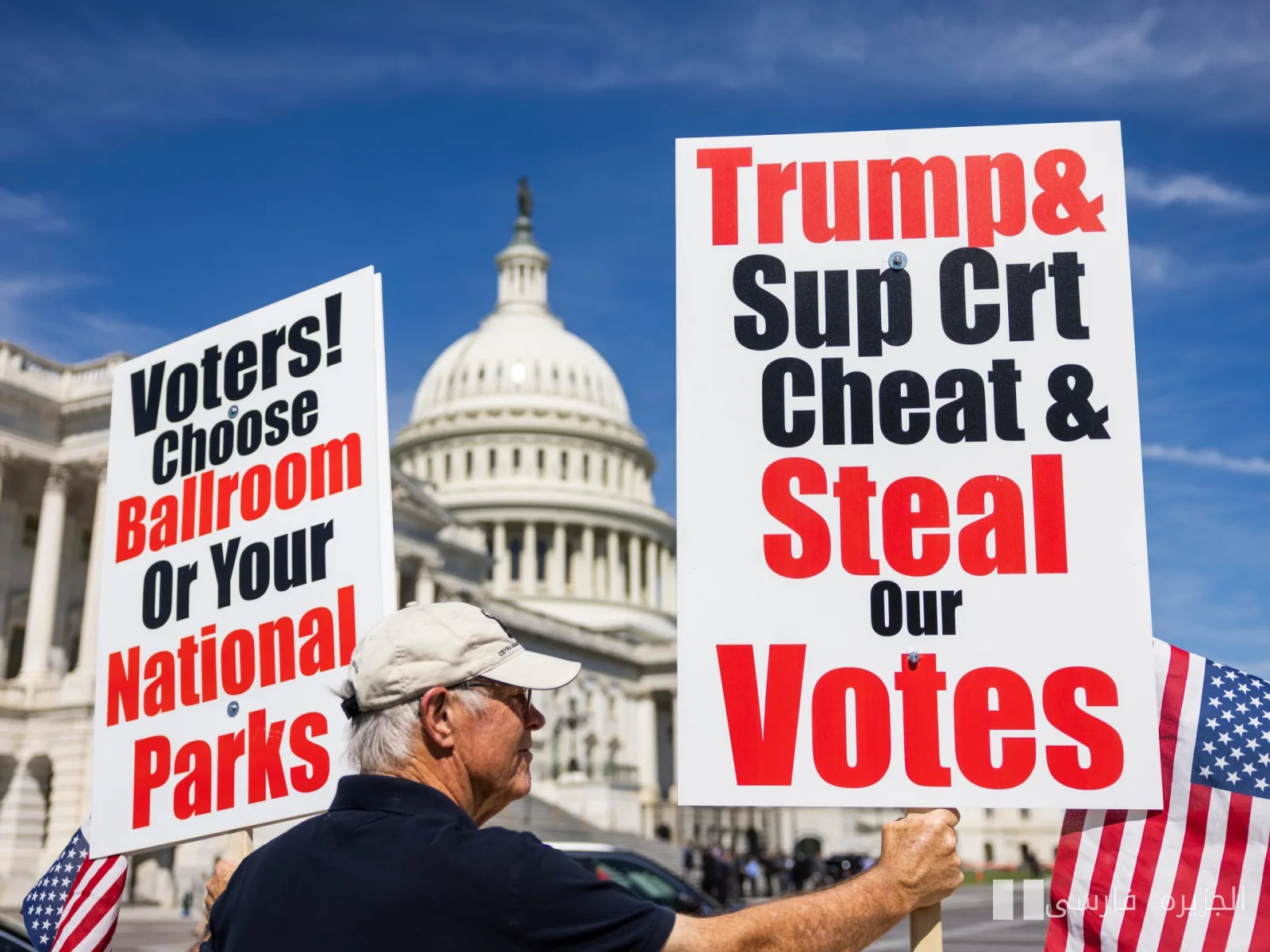
The administration of Donald Trump, the President of the United States, is facing severe criticism from officials and political analysts after the Supreme Court decided to uphold mail-in voting methods. In response to this ruling, Trump harshly criticized the Supreme Court justices, saying: "These are not the people I interviewed to serve on the Supreme Court of the United States."
Concerns About Interference in Elections
The Supreme Court ruling allows states to continue implementing mail-in voting. While mail-in and absentee voting has been used in the United States for decades, political analysts and some officials are concerned that Trump may not allow the electoral process to continue naturally.
Read more: Holding a secret military meeting between the U.S., Israel, and Arab countries in Germany
Election officials across the country have expressed concerns about the possibility of interference, from the potential confiscation of ballots to investigations into electoral fraud. A study conducted with interviews from dozens of local and state election officials shows that they are adopting new strategies to prepare against political interference, misinformation, cyberattacks, and intimidation techniques.
Legal Actions Against Trump's Changes
More than a dozen local and state election officials have announced that they are hiring outside lawyers or seeking legal training for themselves and their staff to prepare for potential demands from the government regarding access to sensitive voting records or election equipment. Additionally, nearly twice that number are expanding public information and social media campaigns to combat misinformation.
Groups like the American Civil Liberties Union and the Brennan Center for Justice have strongly resisted Trump's executive actions aimed at establishing federal voting procedures. Democratic representatives in Congress have also protested these actions, stating that federal election laws should be determined by states and Congress, not the President.
Jamie Raskin, a Democratic representative, said: "The Constitution is clear that states and Congress set the laws for federal elections, not the President." Trump's move to use the United States Postal Service to regulate mail-in voting is seen as an attempt to abuse power.
Senator Alex Padilla, a leading Democrat on the Senate Rules Committee, also emphasized that neither the President nor the Postal Service has the authority to determine how states conduct elections. He warned that restricting mail-in voting could particularly impact military personnel, residents of rural areas, and Americans living abroad.
In response to the criticisms, the White House has claimed that its actions are aimed at preventing illegal voting and ensuring trust in the electoral system. However, this is not the first time Trump has expressed doubts about the security of mail-in voting.
Research shows that voter fraud is extremely rare. The Heritage Foundation, which is a conservative think tank, has documented only 100 cases of illegal voting from 1982 to 2025, which constitutes just 0.000008 percent of over 1.3 billion votes cast in presidential elections during that period.
Read more: Saudi Arabia: Attacking Mecca is a red line; Houthis deny the accusation · Holding the first parliamentary elections in the Bangsamoro Autonomous Region