Al Jazara
روایت خاورمیانه
Al Jazara
روایت خاورمیانه 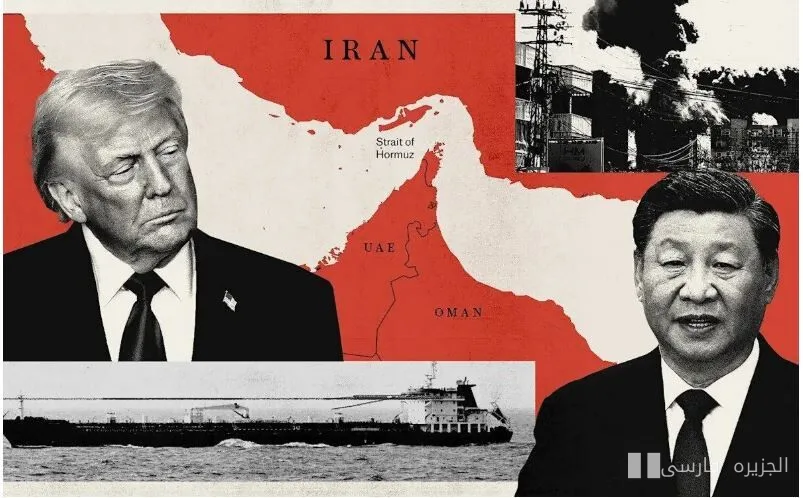
Shu'aib Bahman, the head of the Contemporary World Studies Institute, conducted an in-depth analysis of the reasons for the delay of the Oman meeting and its impact on the Strait of Hormuz and developments in Yemen. This meeting, which was scheduled for Monday, was postponed due to existing challenges between Iran and Saudi Arabia.
Shift in Power Balance in the Persian Gulf
Bahman believes that the delay of the Oman meeting is a sign of a shift in the power balance in the region. He referred to the situation in the Strait of Hormuz and the field advances of Ansar Allah in Yemen, stating: "The geopolitical conditions in the region have completely changed, and the balance of power has shifted in favor of Iran and its allies." This reality is not pleasing for Saudi Arabia, which is recognized as America's top ally in the region, and they are seeking to maintain their interests under these circumstances.
Read more: Analysis of Yemen's Historical Identity and Its People's Resistance Against Foreign Interventions
Saudi Arabia's Multiple Objectives
According to Bahman, Saudi Arabia has multiple objectives in delaying the Oman meeting. One of their goals is to not recognize Iran's arrangements regarding the Strait of Hormuz. Bahman added: "Participation in this meeting would have been seen as a recognition of Iran's dominance over the Strait of Hormuz, and the Saudis were pursuing this goal by their refusal."
He also referred to Saudi pressures on its allies, especially the United States, stating: "The Saudis are trying to involve other players in the Yemen equation, as they do not have the capacity to manage this equation alone. If the Americans do not intervene, the situation will turn against Saudi Arabia."
Wider Consequences of the Conflicts
Bahman continued by discussing the likelihood of British intervention in the conflict between Saudi Arabia and Yemen, saying: "The expansion of this conflict could have serious consequences for Iran. The developments in Yemen are part of a regional war that has involved Iran for over a year now."
He also pointed to new challenges arising from changes in the Straits of Hormuz and Bab el-Mandeb, stating: "Today, the Americans are faced with an equation that is not limited to the Strait of Hormuz, as a second strait named Bab el-Mandeb has also been added to their equations."
According to Bahman, these new conditions in the region could impact the calculations and behavioral equations of all influential players, and new alliances and coalitions are expected to form. He emphasized that historical experience has shown that extra-regional powers have been unable to guarantee the security of regional players.
Read more: The Israeli Army Announced the Discovery of a Tunnel Location and 32 Hezbollah Missiles in Southern Lebanon · The U.S. House of Representatives Voted for the Third Time to End the War in Iran